



Drill a 1/8-inch pilot hole into the center of a solid wood porch joist or pergola rafter at least 24 inches away from walls, railings, or columns. Thread in a rust-resistant stainless steel screw eye rated for 15+ lbs and clip a small 360-degree stainless swivel between the hook and top ring so corner breezes never twist the cords.
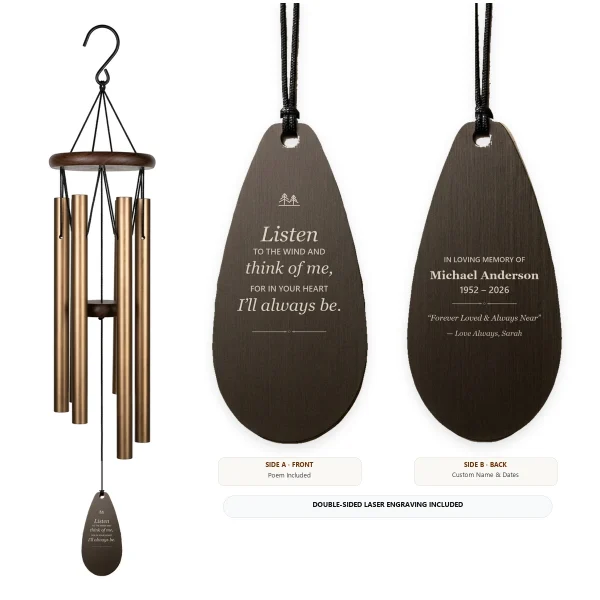
Weighs ~2.36 lbs with anodized outdoor tubes and a two-sided laser-engraved hardwood wind sail built for covered porches, pergolas, and 76-inch garden stands.
The 3 Physical Rules of Hanging Wind Chimes: Breeze Flow, Wall Clearance & Wind Load
Every well-placed outdoor wind chime needs three physical conditions: an open 4 to 12 mph breeze path rather than a dead-air porch corner, 18 to 30 inches of clear space around the wind sail so tubes never bang against siding, and rust-resistant hardware rated for at least three times the chime's static weight.
Most disappointing wind chime installations come down to airflow physics rather than the chime itself. Hung tucked tight inside an L-shaped corner by the front door, even a well-balanced chime sits inside a stagnant dead-air pocket during gentle summer evenings. Hung right on an exposed roof corner with only six inches of wall gap, the wind sail slams into clapboard siding or wraps its cords into a knot.
On the National Weather Service Beaufort Wind Scale, Force 2 to Force 3 breezes (4 to 12 mph) rustle leaves gently without whipping branches. Hang chimes near the outer third of a covered porch ceiling where passing air skims smoothly past the sail, and unhook chimes indoors before Force 6 gusts (25+ mph).
Only the wooden striker and tuned tubes should ever touch. Leave at least 18 inches of horizontal clearance from walls, porch posts, or tree trunks for compact 23 to 28-inch chimes, 24 inches for medium and large 30 to 36-inch chimes, and 30 inches for extra-large 44-inch bass chimes.
Swinging chimes generate 2.5 to 3 times their resting weight in downward and lateral pull during gusts. Pair a 10 to 17 lb working-load hook with a small 360-degree stainless steel ball-bearing swivel so swirling porch eddies spin the chime freely without winding the suspension cords tight.
Drill vs. No-Drill Hardware Matrix by Surface and Chime Weight
Rolled stainless vinyl soffit clips, galvanized gutter magnets, and padded balcony C-clamps support lightweight 23 to 30-inch chimes under 1.8 pounds without drilling a single hole. Chimes at 32 to 44 inches (1.7 to 3.4 pounds) require a solid wood joist screw eye, stud-mounted bracket, tree strap, or freestanding stand.
Renters, condo owners, and homeowners with vinyl-wrapped eaves often want to hang a custom keepsake without piercing siding or voiding exterior warranties. Use the weight-matched table below to pair your exact mounting surface with hardware that will not rust, stain white trim, or drop your chime in a summer storm.
| Mounting Hardware | Target Surface | Drill Needed? | Safe Chime Weight | Compatible Sizes |
|---|---|---|---|---|
| 1/4" Stainless Steel Screw Eye + Swivel | Solid wood porch beam, rafter, or pergola | Yes (1/8" pilot hole) | Up to 25 lbs | All sizes (23"–44") |
| Rolled J-Channel Vinyl Soffit Clip | Vinyl porch ceiling seam or siding lip | No-Drill | Up to 1.8 lbs | 23"–28" Metal / 30" Bamboo |
| Neodymium Hook + Carabiner (40 lb pull) | Galvanized steel beam, steel door header, or steel lintel (not aluminum gutters) | No-Drill | Up to 2.5 lbs (shear) | 23"–32" Chimes |
| Rubber-Padded Balcony Railing C-Clamp + 18" Arm | Metal or wood apartment / condo deck railing | No-Drill | Up to 4.0 lbs | 23"–36" Chimes |
| 18"–24" Forged Wall Bracket (into Wood Stud or Brick) | Exterior house wall or masonry column | Yes (2 lag screws / masonry anchors) | Up to 20 lbs | 28"–36" Chimes (check 24" reach) |
| Cambium-Safe Nylon Tree Strap or Wide Branch Hook | Healthy hardwood limb (3"+ diameter) | No-Drill (Never nail bark) | Up to 25 lbs | All sizes (28"–44") |
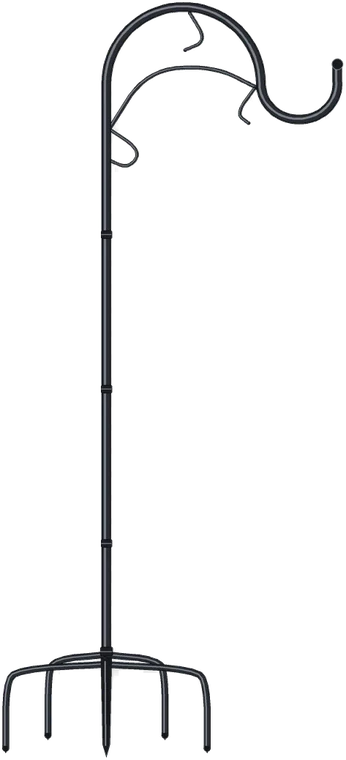
| 5-Prong 60"–76" Shepherd's Hook or 74" Patio Base Stand | Garden lawn bed or concrete patio floor | No-Drill | Up to 17–20 lbs | 28"–44" (at 60"–76" height) |
Choosing the Right Shepherd's Hook or Patio Stand Height (Why 48-Inch Hooks Drag)
Every soil-staked shepherd's hook loses 8 to 10 inches of height underground for stability, plus 3 to 4 inches of top arch drop. A 36-inch wind chime hung on a standard 48-inch garden hook sits right in the dirt; choose a 60 to 76-inch five-prong stand so the wind sail floats 15 to 30 inches clear of grass and pets.
When creating a backyard memorial garden beside a favorite hydrangea bush, birdbath, or bench without an overhead roof, a heavy-duty 76-inch five-prong lawn hook or 74-inch flat-base patio stand gives you complete freedom to aim the chime into the prevailing breeze. Before stepping a soil stake 8 to 10 inches into firm ground, verify there are no shallow landscape lighting wires or drip-irrigation lines underneath, and choose a five-prong base rather than a two-prong wire hook so wet spring soil never lets the pole lean.
| Stand Type & Total Height | Height Left Above Ground | Max Chime Drop | Sail Clearance Above Grass | Best Use Case |
|---|---|---|---|---|
| 48" Standard Garden Hook (Soil Stake) | ~36"–38" at hook | 24"–28" max | 8"–12" (Too low for 32"+) | Small lanterns or compact 26" chimes only |
| 60" 5-Prong Shepherd's Hook (9" Stake) | ~48"–50" at hook | 28"–34" chimes | 14"–20" clear | Flowerbeds, pet memorial gardens & 32" alto chimes |
| 76" Heavy-Duty 5-Prong Stand (10" Stake) | ~62"–65" at hook | 36"–44" chimes | 18"–28" mower-safe | Flagship 36" tenor & 44" deep-bass lawn tributes |
| 74" Weighted Flat-Base Patio Stand (No Stake) | ~70"–71" at hook | 28"–44" chimes | 26"–42" clear | Concrete patios, stone pavers, wood decks & sunrooms |
Neighbor Etiquette, HOA Balconies & Quick Feng Shui Direction Check
When neighboring windows or townhome patios sit closer than 15 feet, avoid bright metallic chimes left out overnight. Choose a silent rainbow window suncatcher, a soft 30-inch bamboo chime, or hang a tuned pentatonic chime on a quick-release S-hook so you can quiet it whenever evening winds pick up.
According to the U.S. Environmental Protection Agency's Protective Noise Levels report and municipal noise studies, outdoor residential sound stays comfortable below 55 dB during the day and 50 dB(A) after 10:00 PM. In dense townhome rows or second-story apartments where balconies sit 9 to 14 feet apart, high-pitched untuned metal rods carry straight through bedroom glass.
- Under 15 Feet (Apartments, Condos & Strict HOAs): Hang a K9 crystal or stained-glass suncatcher inside a sunlit window for zero outdoor sound and zero exterior HOA hardware rules, or choose a 30-inch kiln-dried bamboo chime whose low, woody tap dissipates within a few yards. You can compare every material side by side in our interactive wind chime sound and porch size guide.
- 15 to 30 Feet (Suburban Yards): Hang mellow 32 to 36-inch pentatonic chimes under a covered back porch shielded from raw street gusts rather than on an exposed fence line right beneath a neighbor's bedroom window.
- 4 Easy Ways to Quiet a Chime at Night: (1) Lift the top ring off its S-hook in five seconds before windy nights, (2) loop a soft cotton ribbon loosely around the tubes and tie it to a nearby rail during breezy evenings, (3) slide the adjustable striker toggle down below the tube ends if equipped, or (4) clip the wind sail cord to a quick-release magnet holder.
- Backyard Bird Feeders: Keep hanging chimes 4 to 6 feet horizontally away from hummingbird feeders and nesting boxes so a swinging wind sail in gusty weather does not startle feeding birds.
Quick Compass Check for Traditional Feng Shui Placement
If you also enjoy classical Five-Element placement when choosing which side of the porch or garden to use, match hollow-tube chime materials to these traditional compass sectors and avoid hanging chimes directly above a bed, desk chair, or bathroom door:
| Compass Sector | Traditional Element | Recommended Chime Material | Ideal Home Spot |
|---|---|---|---|
| West & Northwest | Metal | 6-tube anodized aluminum (bronze, silver, or black) | West-facing covered porch or patio pergola |
| North | Water (nourished by Metal) | 6-tube tuned metal chime | Front porch entryway off to the side of the door swing |
| East, Southeast & South | Wood & Fire | Natural kiln-dried bamboo & hardwood sail | Morning-sun garden hook, east deck, or shaded arbor |
| Sunlit South / West Window | Light & Fire | Faceted K9 crystal prism suncatcher | Indoor sunroom, kitchen casement, or reading nook window |
Sending a chime directly to a grieving friend or family member and unsure what kind of porch, pets, or HOA rules they have? Try our 3-tap sympathy gift and instant digital eCard finder to match their home setup automatically.
Frequently Asked Questions About Where and How to Hang Wind Chimes
How far from a wall or house siding should you hang wind chimes?
Hang compact 23 to 28-inch chimes at least 18 inches away from walls, railings, or porch columns, leave 24 inches of horizontal clearance for 30 to 36-inch chimes, and give 44-inch deep-bass chimes 30 inches of space so the wind sail swings freely without striking siding.
How can I hang wind chimes outside without drilling holes?
For chimes under 1.8 pounds, slide a rolled stainless steel J-channel clip into a vinyl soffit seam. For heavier 32 to 44-inch chimes without drilling, clamp a padded arm onto a deck railing, loop a wide nylon strap over a tree branch, or use a 60 to 76-inch shepherd's hook stand.
Why are my wind chimes not making sound even when it is breezy?
Silent chimes are usually tucked inside a dead-air pocket deep in an L-shaped porch corner or hung from a twisted top cord that locks movement. Move the hook closer to the outer porch edge where 4 to 12 mph breezes pass unobstructed and add a 360-degree swivel hook.
Can you hang wind chimes from a living tree branch safely?
Never hammer nails or twist screw eyes into living tree bark, which opens wounds to decay and insects. Instead, drape a wide weather-resistant nylon strap or rubber-coated branch hook over a healthy limb at least three inches thick and 24 to 30 inches away from the trunk.
What height shepherd's hook do I need for a 36-inch wind chime?
Choose a 72 to 76-inch heavy-duty five-prong shepherd's hook for a 36-inch wind chime. Because 8 to 10 inches of the stake goes underground and the top arch drops several inches, a 76-inch stand holds a 36-inch chime roughly two feet clear of lawn grass and pets.
Should I take wind chimes down during storms or winter freezes?
Unhook outdoor wind chimes and bring them inside whenever National Weather Service forecasts call for wind gusts above 25 mph, severe thunderstorms, or ice storms. Using an open S-hook beneath your ceiling screw eye lets you lift any chime down in under ten seconds.
Meteorological, Environmental Acoustic & Community References
- National Oceanic and Atmospheric Administration (NOAA) / National Weather Service. Beaufort Wind Scale Specifications for Land (Force 2 Light Breeze 4–7 mph to Force 6 Strong Breeze 25–31 mph).
- U.S. Environmental Protection Agency (EPA), Office of Noise Abatement and Control. Protective Noise Levels: Condensed Version of EPA Levels Document (Outdoor Residential Ldn = 55 dB Guideline).
- U.S. Homeowner, Condo & HOA Community Discussions on Porch Placement, No-Drill Hardware & Neighbor Courtesy (
r/homeowners,r/Apartmentliving,r/OutdoorSpaces).