


Step onto a quiet porch late in the afternoon, right when the heat breaks and a light breeze turns the corner of the roof. Before you feel the air on your sleeve, one low note drifts across the floorboards, and you may catch yourself wondering who first thought to hang something that sings when the wind arrives. The answer runs through rice fields, Roman doorways, temple eaves, and Japanese verandas. Our editorial team at PersonalizedChimes.com pieced this timeline together from museum collections and published field research, and this guide includes links to our custom-engraved chime collections.
Where and When Were Wind Chimes First Invented?
Most chime histories place the first wind-stirred rattles in Southeast Asia around 3000 BCE, where farming villages hung bone, shell, and split bamboo to scare birds from their crops. Because bamboo and plant fiber rarely survive, no single object can be named the first wind chime.
No single inventor signed a name to the first wind chime. Long before metal smelting, villagers across Southeast Asia tied dry bone, pierced shells, smooth stones, and split bamboo onto plant-fiber cords. Hung along field borders and under thatched roofs, those early rattles clacked whenever a gust rolled in from the coast.
That dry clatter did a practical job. A moving, rattling line startled birds away from ripening grain without anyone standing watch in the sun all day. Bamboo bird-scarers and wind-turned clappers are still part of village life in Bali’s rice terraces, a humble ancestor of today’s porch wind chimes tuned for gentle breezes.
| Historical Era | Region & Tradition | Primary Materials | Original Purpose & Sound Character |
|---|---|---|---|
| c. 3000 BCE (traditional date) | Southeast Asia | Split bamboo, pierced shells, bone, smooth stones | Scaring birds from crops; dry, rapid clacking |
| c. 1500 to 256 BCE | Shang & Zhou Dynasty China | Cast bronze bells (yongzhong and bianzhong sets) | Court and ritual music struck by hand with wooden mallets |
| 1st c. BCE to 1st c. CE | Ancient Rome (Pompeii & Herculaneum) | Bronze tintinnabulum clusters on chains | Good-luck charms in doorways and gardens; bright ringing |
| AD 200 to 1540 | Ancestral Puebloan Southwest | Shell tinklers, copper and clay bells, ringing stones | Ceremony and costume sound; worn, shaken, or struck |
| 618 to 1279 CE | Tang & Song Dynasty China | Bronze pagoda eave bells (fengling) | Wind-rung roof bells that kept birds off temple eaves |
| 1603 to 1867 CE | Edo-Period Japan | Thin glass furin with paper tanzaku strips | A cooling summer sound and short written wishes |
| Late 1800s to today | Europe & North America | Orchestral tubular bells, then aluminum tubes and wood strikers | Church-bell tones in concert halls; tuned porch chimes and family tributes |
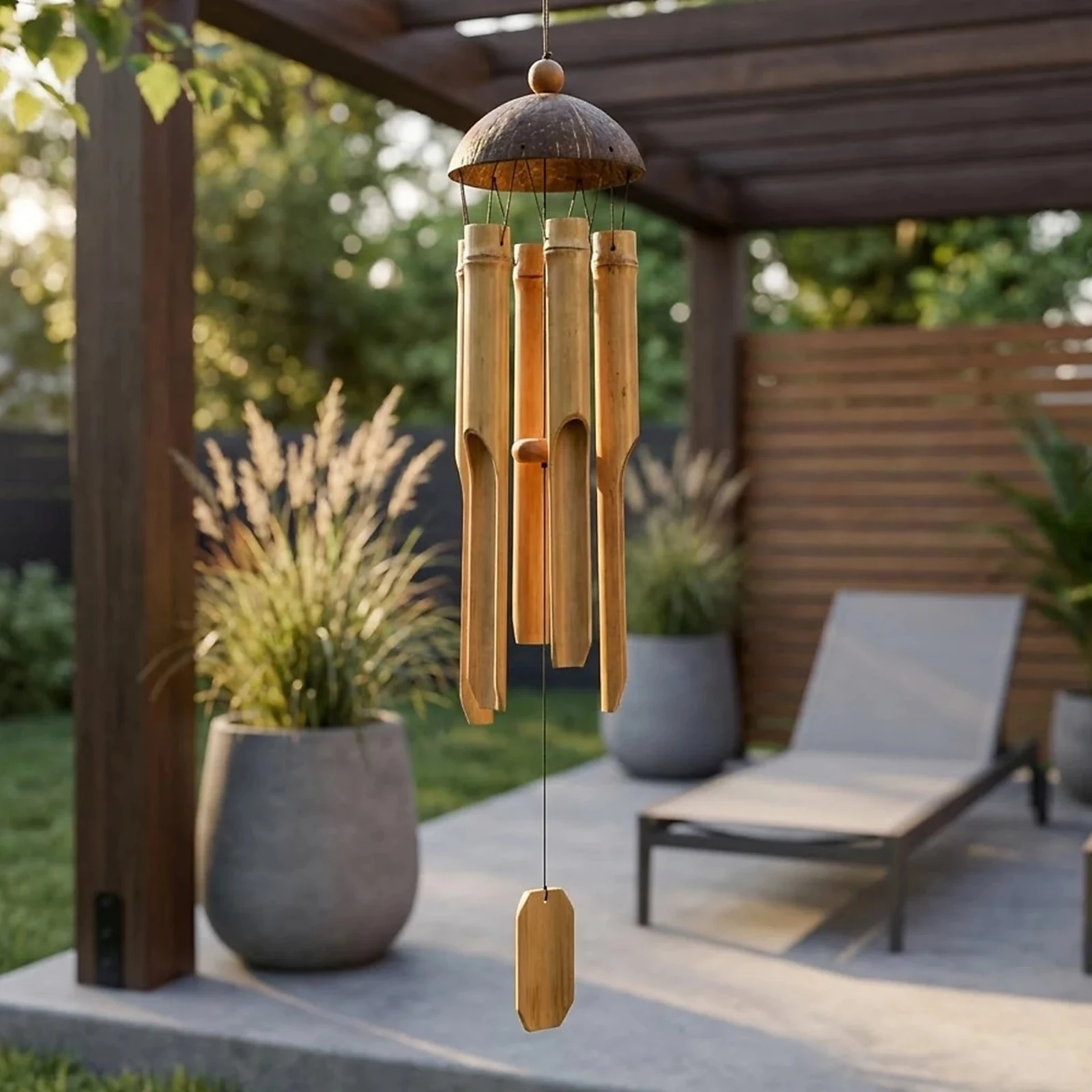
Ancient Bronze and Courtyard Bells: Chinese Casting and Roman Tintinnabula
Bronze bell-making began in China more than 3,500 years ago, where bells were struck by hand in court music. Roman households, working entirely separately, later hung bronze bell clusters in doorways and gardens, where a breeze or a passing guest set them ringing.
Once artisans mastered copper-and-tin alloys, bells gained a clear pitch and a working life measured in centuries. Two civilizations thousands of miles apart built their own bronze bell traditions, and both still echo in the chimes people hang today.
Shang and Zhou Bronze Bells Over 3,500 Years Ago
Some online timelines date Chinese metal wind bells to around “1100 C.E.,” which is far too late. Exhibition notes from the Smithsonian National Museum of Asian Art describe bells as among the first metal objects made in China, beginning over 3,500 years ago as small noisemakers and growing, by the late Bronze Age, into large tuned sets played in ensembles. Those graduated bianzhong sets flourished under the Zhou dynasty (c. 1046 to 256 BCE).
Unlike Western church bells that swing an iron clapper inside a round dome, ancient Chinese yongzhong bells had an almond-shaped body and no clapper at all. Players struck the outside with wooden mallets, and the shape let one bell sound two distinct pitches depending on where it was hit, each with a short ring that faded quickly.

Roman Bronze Tintinnabula in Gardens and Peristyles
Across the Mediterranean in the first century BCE and first century CE, Roman families hung cast-bronze bell clusters called tintinnabula (from the Latin tintinnare, “to ring”). Excavations at Pompeii and Herculaneum uncovered ornate examples once hung on chains in garden courtyards, bathhouses, and shop doorways, and several now sit in museum collections.
Romans valued the tintinnabulum as a good-luck charm as much as a bell. Hung where evening air moved through the colonnade, the little bells were believed to ward off bad luck, and their bright ring also told the household when the wind rose or a guest stepped through the door.
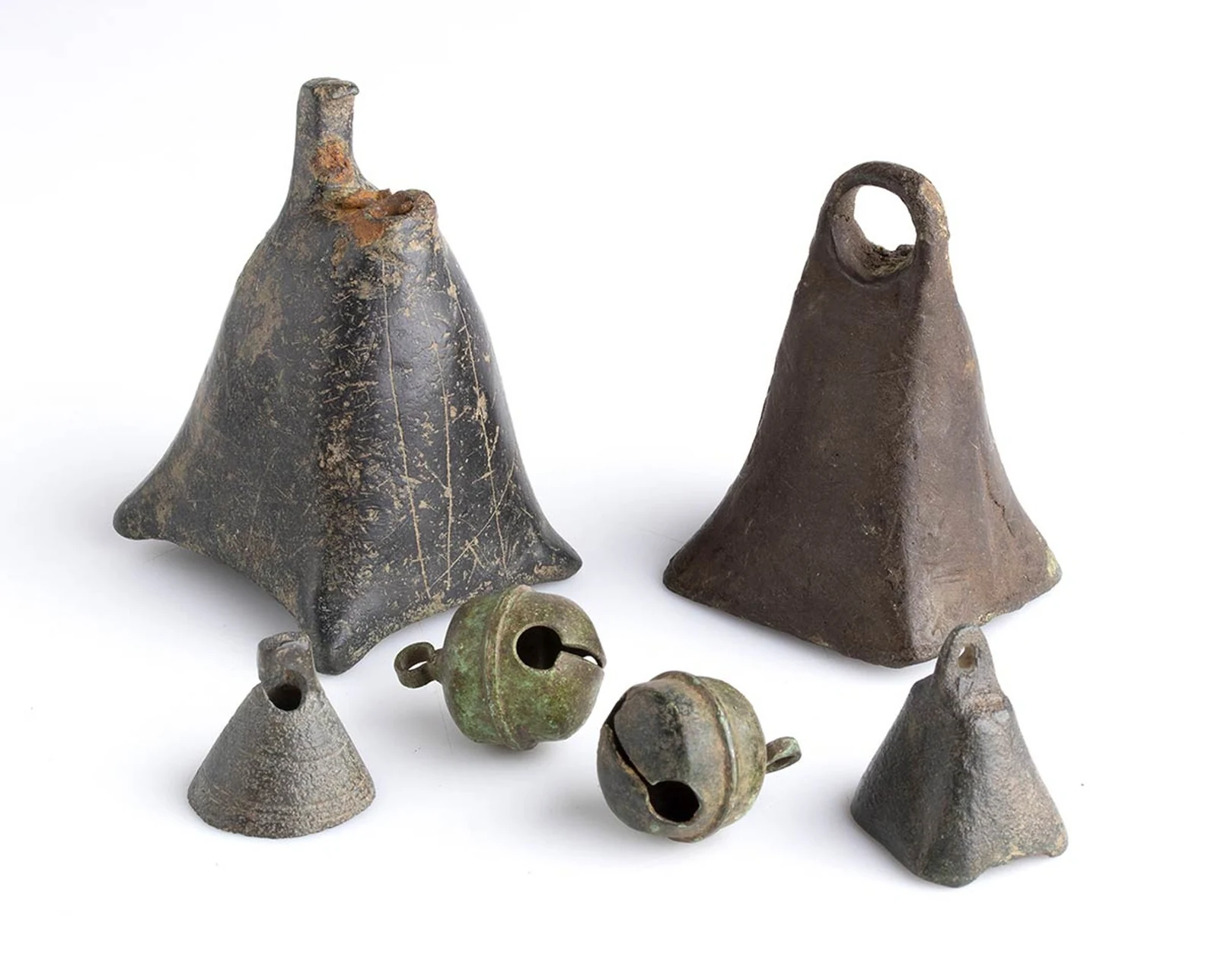
Temple Eaves and Wish Strips Across Asia: Pagoda Fengling, Edo Furin, and Himalayan Bells
Buddhism spread wind-rung bells along temple rooflines from China to Japan and into the Himalayas. In Japan the temple bell eventually moved onto home verandas, where Edo-period glassmakers paired delicate glass bells with paper strips carrying short summer verses and wishes.
As Buddhist temples and pagodas spread across Asia in the first millennium CE, wind bells became a familiar voice along their rooflines. Builders hung a small clapper inside each bell with a flat, wind-catching plate beneath it, so passing air could ring the bell without human hands.
Pagoda Corner Fengling in Tang and Song China
During the Tang (618 to 907 CE) and Song (960 to 1279 CE) dynasties, builders hung bronze fengling (“wind bells”) from the upturned corners of pagoda roofs, sometimes dozens to a single tower. Tradition holds that the swaying bells kept birds from nesting in the painted rafters, and on a breezy day their steady ring carried across the temple grounds.
Edo Glass Furin and Paper Tanzaku in Japan
Bronze temple wind bells, known in Japan as futaku, arrived with Buddhism and slowly moved from temple eaves to home verandas. By the later Edo period (1603 to 1867), artisans in Edo, today’s Tokyo, were blowing thin glass bowls called Edo furin, painting scenes on the inside, and leaving the rim unpolished so the small inner striker gives a crisp, bright note.
Families hung furin along wooden verandas through the hottest weeks of summer, because hearing the breeze made a stuffy room feel cooler. Tied below each bell was a tanzaku, a paper strip often brushed with a short verse or wish, a pairing of light, motion, and words that lives on in sunlit crystal suncatcher chimes made for bright windows.
Himalayan Monastery Eave Bells and Wind-Horse Wishes
High in the Himalayas, monasteries hang bronze bells along their timber eaves, often near strings of Lungta (“Wind Horse”) prayer flags. Local custom holds that the mountain wind moving the flags and bells carries prayers for peace and goodwill out across the valley.
Paper tanzaku strips carry centuries of charm, yet a single summer storm can turn thin washi paper to pulp on an open porch. Double-sided laser engraving keeps that wish-carrying idea alive on coated metal or redwood wind sails ($52.95 to $89.95), and a short blessing or family date of two to three lines stays readable from a porch chair 3 to 5 feet away.

Ancient North American Bells, Shell Tinklers, and Natural Sound Makers
Long before European contact, Ancestral Puebloan communities in the Southwest rang copper bells traded north from Mexico, made clay bells, strung shell tinklers, and struck resonant stone kiva bells. Researchers have studied about 1,300 ancient instruments from 17 national parks, dating from AD 200 to 1540.
European settlers did not bring the first bells to North America. Across desert canyons and long trade routes, Indigenous makers shaped natural materials that clicked, rattled, and rang for centuries before contact.
An archeomusicology study featured by the U.S. National Park Service follows Dr. Emily Brown, a former NPS archeologist, through 1,300 ancient instruments from 17 Southwestern national parks, dating from AD 200 to 1540. Her inventory includes flutes and whistles, gourd rattles, shell trumpets, tinklers, and bells, with copper bells and shell tinklers among the prized goods traded north from Mexico.
“Bells were made from copper and clay. So-called kiva bells were large suspended stones that resonated when struck.”
Tinklers were strings of seashells, walnut shells, bits of petrified wood, or hooves, and the same article describes copper bells and shell tinklers as eye-catching additions to ceremonial costumes. Because people wore them and danced with them, they are best seen as cousins of the wind chime. Anyone who has hung a strand of shells by a screen door knows that same soft click.
Natural materials still ask for shelter today. Kiln-dried 30-inch bamboo chimes ($55.95 to $57.95) give a woody tap that ends in under a second, and they last longest under a covered roof. Before freezing rain or a hard blow, homeowners in snowy states usually bring bamboo and glass indoors and leave weather-ready outdoor chimes that ride out all four seasons under the porch roof.

If you love the calm voice of old temple bells and want something built for year-round American weather, thick-walled anodized aluminum is the natural modern choice. Our 36-inch flagship tenor chime ($84.95 to $89.95) has a reassuring heft in the hand at about 2.36 pounds, arrives in a protective die-cut molded-foam box, and orders of $85+ ship free within the US.
From 19th-Century Orchestral Tubes to Modern Tuned Porch Chimes
Orchestral tubular bells of the late 1800s showed that hollow metal tubes could sound like church bells, and twentieth-century makers carried the idea outdoors. Thicker aluminum tubes, rounded wood strikers, and pentatonic tuning turned clanging backyard chimes into mellow porch instruments.
Set a nineteenth-century garden bell beside a contemporary porch chime and the biggest design change in this long history is easy to spot. Flared cast cups gave way to hollow metal cylinders hung in a circle around a wooden striker.
Why Thick-Walled Tubes Replaced Clanging Metal Bell Clappers
Orchestral tubular bells appeared in European concert halls in the late 1800s, giving composers a church-bell sound without multi-ton bronze castings. By the mid-twentieth century, mass-produced metal chimes hung on porches across American suburbs, though many inexpensive sets used thin tubes cut to arbitrary lengths that clashed in a brisk gust.
During the late 1970s and 1980s, a small group of American makers began treating porch chimes as true outdoor instruments, and three changes made the biggest difference you can hear and feel:
- Five-note pentatonic tuning: Leaving out half-step intervals lets any two or three tubes blend into a warm chord whenever the breeze shifts.
- Thicker tubes and wood strikers: A rounded hardwood striker meeting thick-walled tubes, hung on braided UV-resistant cord, gives a mellow sustain instead of a 2 AM clatter. Our own 28-, 32-, and 36-inch chimes weigh about 1.28 to 2.36 pounds, and the 36-inch size sits with our deep-tone chimes with warm church-bell sustain.
- Anodized outdoor finishes: Bronze, silver, and matte-black anodized aluminum does not red-rust, so a well-made set mostly asks for a fresh UV-stabilized cord every few years.
In a long r/BuyItForLife discussion on the very best wind chime, longtime owners highlight a consistent real-world trade-off:
Longtime owners point to heavy, carefully tuned chimes from makers such as Corinthian Bells and Music of the Spheres, praising a deep tone that holds up outdoors for years.
For families seeking substantial anodized tubes paired with custom two-sided laser engraving of a loved one’s name and dates, mid-sized 28- to 36-inch tribute chimes bridge outdoor durability with personal meaning.
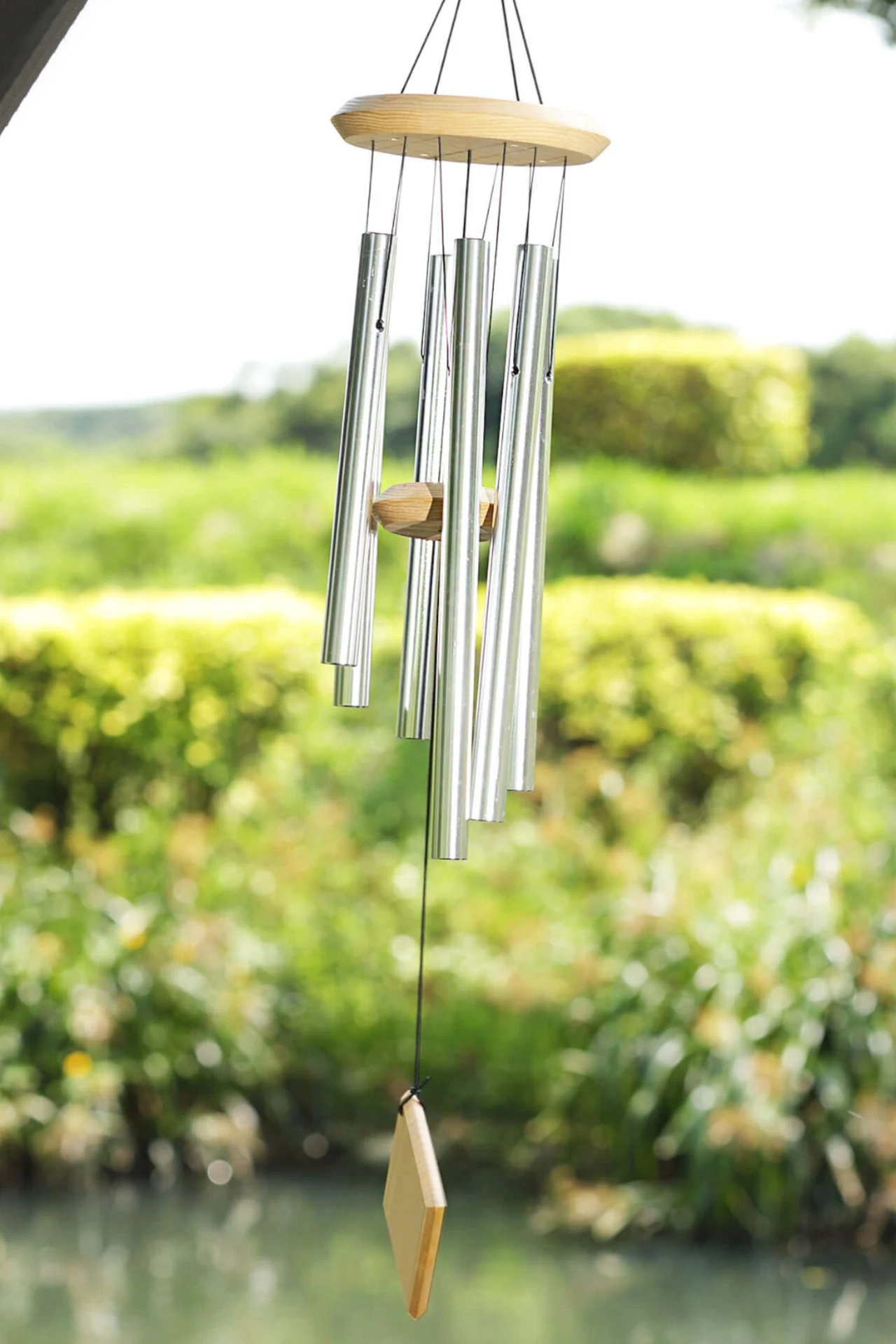
A Modern Landmark: The 42-Foot Guinness Record in Casey, Illinois
Tubular chime building reached monument scale on June 22, 2012, when Guinness World Records recognized the world’s largest wind chime at 109 East Main Street in Casey, Illinois. Built by Casey resident Jim Bolin, the chime measures 42 feet (12.80 meters) long, with five metal tubes suspended 49 feet above the ground.
It is a working chime, so on a gusty afternoon road-trippers can hear its deep voice roll along Main Street. Back home, families keep the older wish-strip custom alive on their own porches with custom two-sided memorial chimes engraved with family names.

If this long history has you thinking of someone you miss, a chime can carry their name the way a tanzaku once carried a wish. Our studio laser-engraves two to three short lines on each side of the sail ($52.95 to $89.95), and every chime is engraved to order and arrives by tracked US delivery in 11 to 17 business days, usually after the funeral flowers have faded. If you want to reach the family sooner, a free $0 Instant Digital Sympathy & Audio Preview eCard goes out by email right away, and the box itself carries no price tags.
Frequently Asked Questions
Who invented the first wind chimes?
Nobody knows a single inventor. Most histories credit farming villages in Southeast Asia around 3000 BCE, which hung split bamboo, bone, and shells to scare birds from crops, long before Chinese and Roman artisans cast bronze bells.
Why did ancient temples and Roman homes hang wind bells?
Both hung bells for protection. Buddhist temples in Tang-dynasty China hung bronze fengling under pagoda eaves to keep birds away and mark the wind, while Roman families hung bronze tintinnabula in doorways and gardens as good-luck charms against misfortune.
What have wind chimes symbolized across cultures?
Protection, good fortune, and remembrance come up again and again. Romans hung bells against bad luck, Buddhist temples let the wind ring their eaves, Himalayan custom sends blessings out on the breeze, and many American families now hang a chime in memory of someone they love.
When did tuned aluminum tube wind chimes become popular in the West?
Tubular bells reached European orchestras in the late nineteenth century, and mass-produced metal chimes spread across American porches by the mid-twentieth century. Carefully tuned pentatonic porch chimes caught on during the late 1970s and 1980s.
How did paper wish strips evolve into modern engraved wind sails?
The link is one of spirit more than engineering. Edo-period families tied washi paper tanzaku with short verses beneath glass furin, and today’s engraved wind sails keep that habit of hanging words in the breeze, with names, dates, and short blessings laser-etched into coated metal or redwood that outlasts paper by many seasons.
Conclusion
Over thousands of years, materials shifted from bamboo and pierced shells to Pompeii bronze, Edo glass, and thick-walled aluminum, yet the reason we hang wind chimes has stayed remarkably steady. We still place them by our doors to soften a busy afternoon, notice a passing breeze, and keep the people we love close. If you choose one for your own porch, listen to the sustain first, and keep any sail inscription to three short lines or fewer so every word reads cleanly from a porch chair.
From ancient courtyard bells to a quiet chair on your front porch today, trust that a few sincere words etched cleanly on the wind sail will carry warmth on the breeze for decades. – Hannah Mercer, Bereavement Etiquette & Verse Curator
Verified Museum, Archaeological & Historical References (3 Sources)
- Smithsonian National Museum of Asian Art: Resound: Ancient Bells of China — https://asia.si.edu/whats-on/exhibitions/resound-ancient-bells-of-china/
- U.S. National Park Service (Joanne Sheehy Hoover, reporting on Dr. Emily Brown): Making Prehistoric Music: Musical Instruments from Ancestral Puebloan Sites — https://www.nps.gov/articles/musical-instruments-from-ancestral-puebloan-sites.htm
- Guinness World Records: Largest Wind Chime (Casey, Illinois — Certified June 22, 2012) — https://www.guinnessworldrecords.com/world-records/largest-wind-chime