

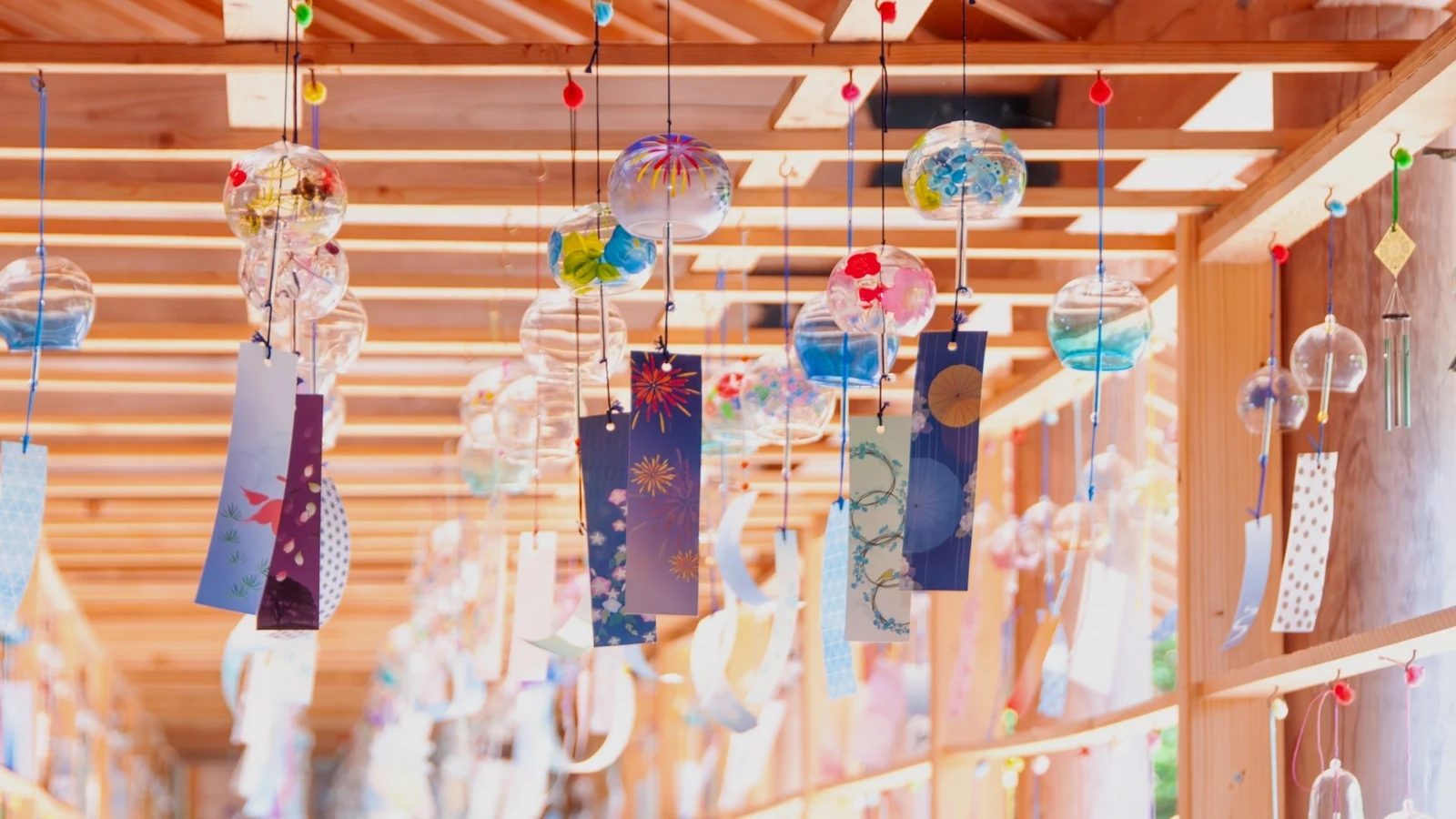
Sheltered Summer Furin vs. Four-Season Engraved Chimes
Hang a hand-blown Edo furin or an Iwate Nambu iron bell in a sheltered summer window when you want one clear, high note and the paper-poem ritual; choose a 28- to 36-inch anodized aluminum or 30-inch bamboo chime with a two-sided laser-engraved sail ($52.95 to $89.95) when the verse needs to stay outdoors through all four seasons. PersonalizedChimes.com makes those engraved chimes and does not sell furin, so the links in this guide point to our own collections.
Skip a delicate furin outdoors if your porch faces strong gusts, sideways summer rain, or nights below 32°F, or if it hangs close to a neighbor’s bedroom window where a high, restless note can carry all night.
Traditional Japanese Furin vs. Multi-Tube Porch Chimes: Side-by-Side Comparison
A traditional furin rings one bright, high note from a single small bell, while a 28- to 36-inch six-tube aluminum chime layers slower, rounder notes and a 30-inch bamboo chime answers the wind with a short, woody tap.
Hold a glass furin in your palm and the first surprise is how little it weighs. A breath of July air is enough to tug the paper strip below, swing the slim glass clapper inside, and tap one high note against the rim.
Western porch chimes sit at the other end of the scale, one branch of the long history of wind chimes around the world. Six hollow anodized aluminum tubes hang around a hardwood striker, and the 28- to 36-inch sets weigh roughly 1.3 to 2.4 pounds. That heft keeps the swing slow and even in a steady porch breeze, so the notes overlap and fade gently instead of rattling.
| Comparison Feature | Edo Hand-Blown Glass Furin | Nambu Cast-Iron Furin | 28″ to 36″ Aluminum & 30″ Bamboo Chimes |
|---|---|---|---|
| Size & Feel in the Hand | One small palm-size bowl; feather-light | One small iron dome; dense and solid | 28″ to 36″ overall; roughly 1.3 to 2.4 lbs (aluminum) |
| Core Anatomy | Glass bowl (sotomi), glass clapper (zetsu), paper tanzaku | Iron dome, metal clapper, paper strip | Six aluminum tubes or natural bamboo tubes, wood striker, engraved sail |
| Real-Ear Sound | Bright, brief, high tinkle | Clear, high ring that lingers | Rounded notes that fade slowly, or a soft woody tap under 1 second |
| Poem & Wish Medium | Handwritten paper (tears in rain) | Paper strip (needs a dry eave) | Two-sided laser-engraved metal or redwood sail |
| 4-Season Weather Care | Sheltered summer window; indoors below 32°F | Deep overhang; wipe dry to stop rust | Aluminum outdoors year-round; bamboo under a covered porch |
| Typical Price | Varies by maker and import shipping | Varies by maker and import shipping | $52.95 to $89.95 (free US shipping on $85+) |
Both traditions earn a loyal place at home once you match each build to the right spot:
- Reverse-painted craft: Free-blown Edo glass, painted from the inside, glows like a tiny lantern in morning sun.
- Crystalline iron sustain: Dense Nambu iron holds a clear ring that lingers across a quiet courtyard.
- Whisper-light sensitivity: A featherlight paper strip catches summer drafts too faint to move a heavy porch sail.
- Fragile in sudden squalls: A thunderstorm gust can swing thin glass into window trim and crack it.
- Weather-sensitive paper: Handwritten paper curls and tears after a few humid summer showers.
- Nighttime neighbor carry: One high note repeating through a windy night can wear on a close neighbor’s sleep.
From Temple Bells to Glass Furin: How Japanese Wind Bells Took Shape
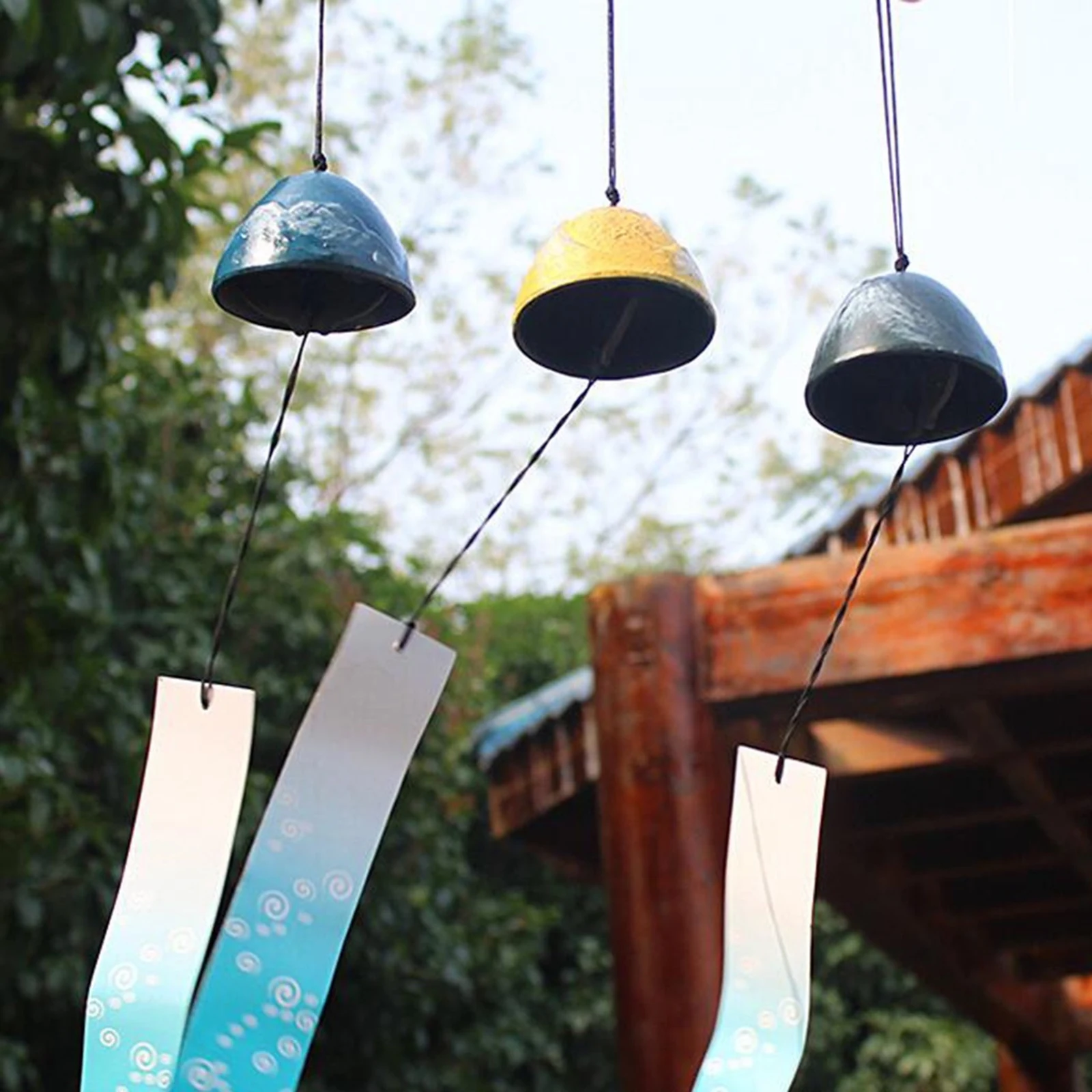
Japanese wind bells began as bronze futaku hung from Buddhist temple eaves, and glass furin, free-blown and painted from the inside, became familiar in ordinary homes toward the end of the Edo period.
Whatever the bell is made of, a traditional furin has three working parts:
- Sotomi: The outer bell of blown glass, cast iron, brass, or glazed porcelain that shapes the voice.
- Zetsu: The clapper hanging inside, usually a slim glass tube in Edo glass bells or a small metal piece in iron ones.
- Tanzaku: The paper strip tied below the clapper. It catches passing air and swings the zetsu against the rim.
Bronze Futaku on Buddhist Temple Eaves
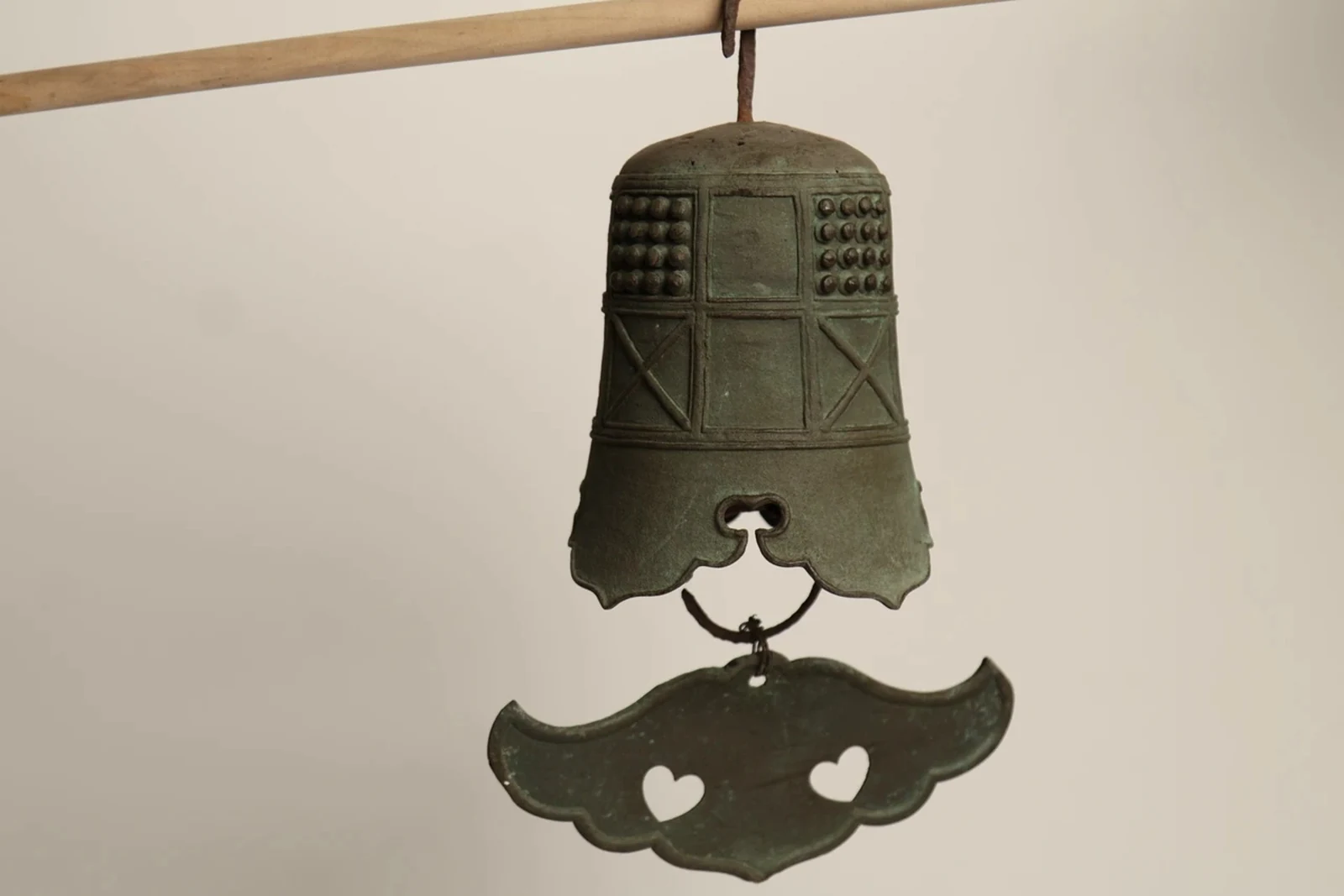
Wind-rung bells came to Japan from mainland Asia along with Buddhism and its temple architecture. Builders hung bronze bells called futaku from the four corners of temple halls and pagodas, and wind bells at temples were treated as talismans that kept evil spirits and misfortune away.
Walk under an old temple roof in Kyoto or Nara and you can still spot bronze bells, green with age, hanging from the eave corners. The deep overhang is the part worth borrowing: shelter from driving rain and the worst gusts is still the kindest spot for a handcrafted porch chime today.
Edo Glass Blowers, the Uneven Rim, and Nambu Cast Iron
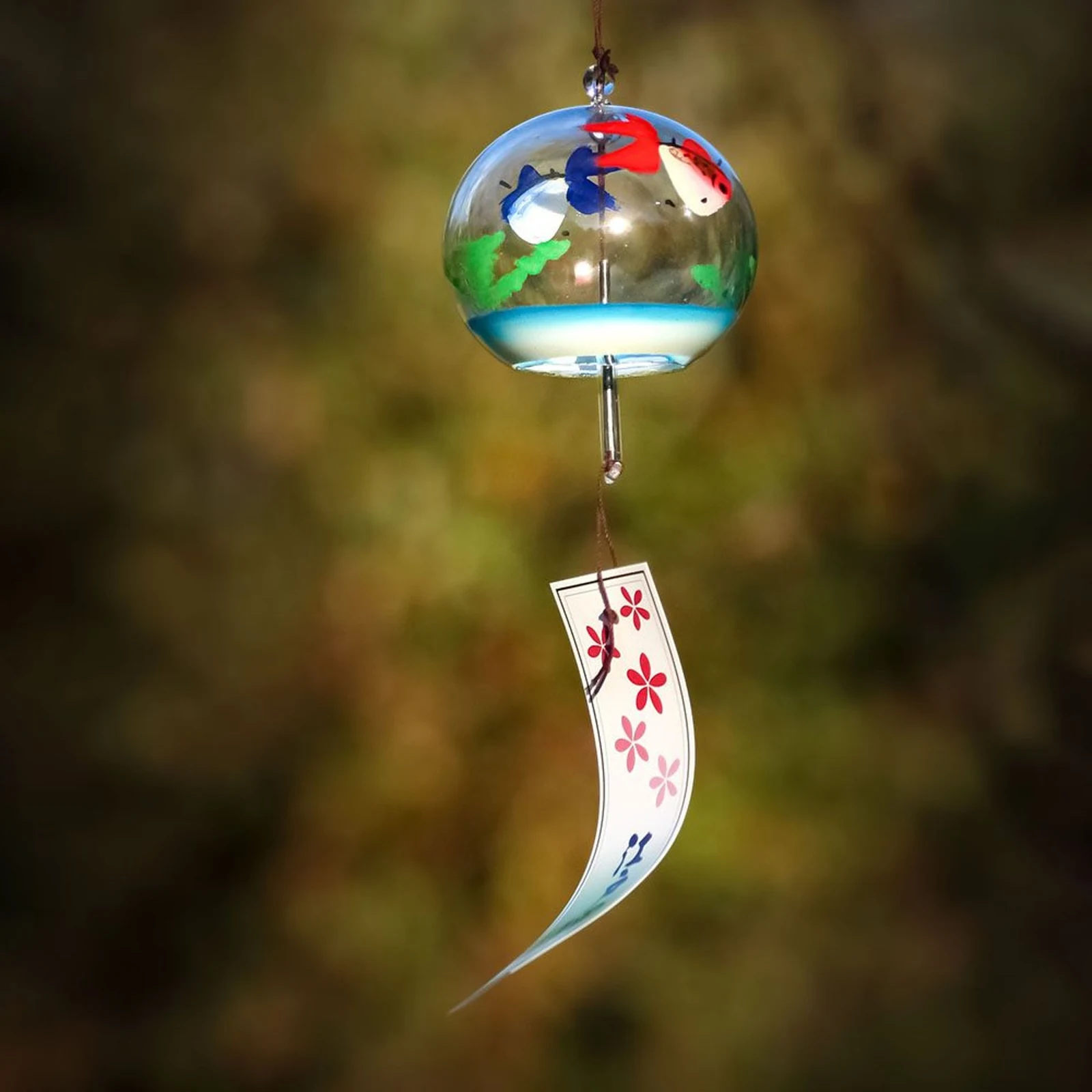
Glassmaking skills that arrived through the trading port of Nagasaki spread to Edo, today’s Tokyo, and glass wind bells reached ordinary households toward the end of the Edo period. Makers still shape each bowl by breath alone, without a mold, then brush goldfish, morning glories, or summer fireworks onto the inside wall, a reverse-painting skill that takes years to learn.
Tilt a genuine Edo furin toward the light and you will see that its bottom lip is faintly toothed. Makers leave the mouth uneven on purpose. The slim glass clapper taps that rough edge, and the irregular rim is what gives each bell its own slightly different voice.
Farther north in Iwate Prefecture, foundries cast a sturdier cousin in dark iron, known as Nambu Tekki. Dense iron walls give these small domes a clear ring that lingers and carries across a courtyard, and Wikipedia’s overview of furin notes that the sound of the hundreds of furin hung along the platform at Mizusawa Station was chosen as one of the 100 Soundscapes of Japan.
Why Japanese Wind Bells Mean Summer Relief and Shared Wishes
A furin hung along a shaded veranda turns an invisible summer breeze into something you can hear, and Japanese shrines still use wind bells to carry visitors’ wishes on the air.
Long before air conditioning, Japanese households met humid July afternoons by sliding open shoji screens along the engawa veranda. Even when the air felt still against the skin, one soft ring from the eave told everyone a breeze had just crossed the garden.
That is why the sound itself reads as cool in Japan, and why the furin became a symbol of summer. You may see posts claiming a furin lowers the room temperature by a set number of degrees. The thermometer stays put. What changes is the moment: a light, clear note gives a hot room a cue to pause and breathe. That association does not travel automatically, though. To a neighbor who did not grow up with it, the same note at midnight can sound like a bell that will not stop.
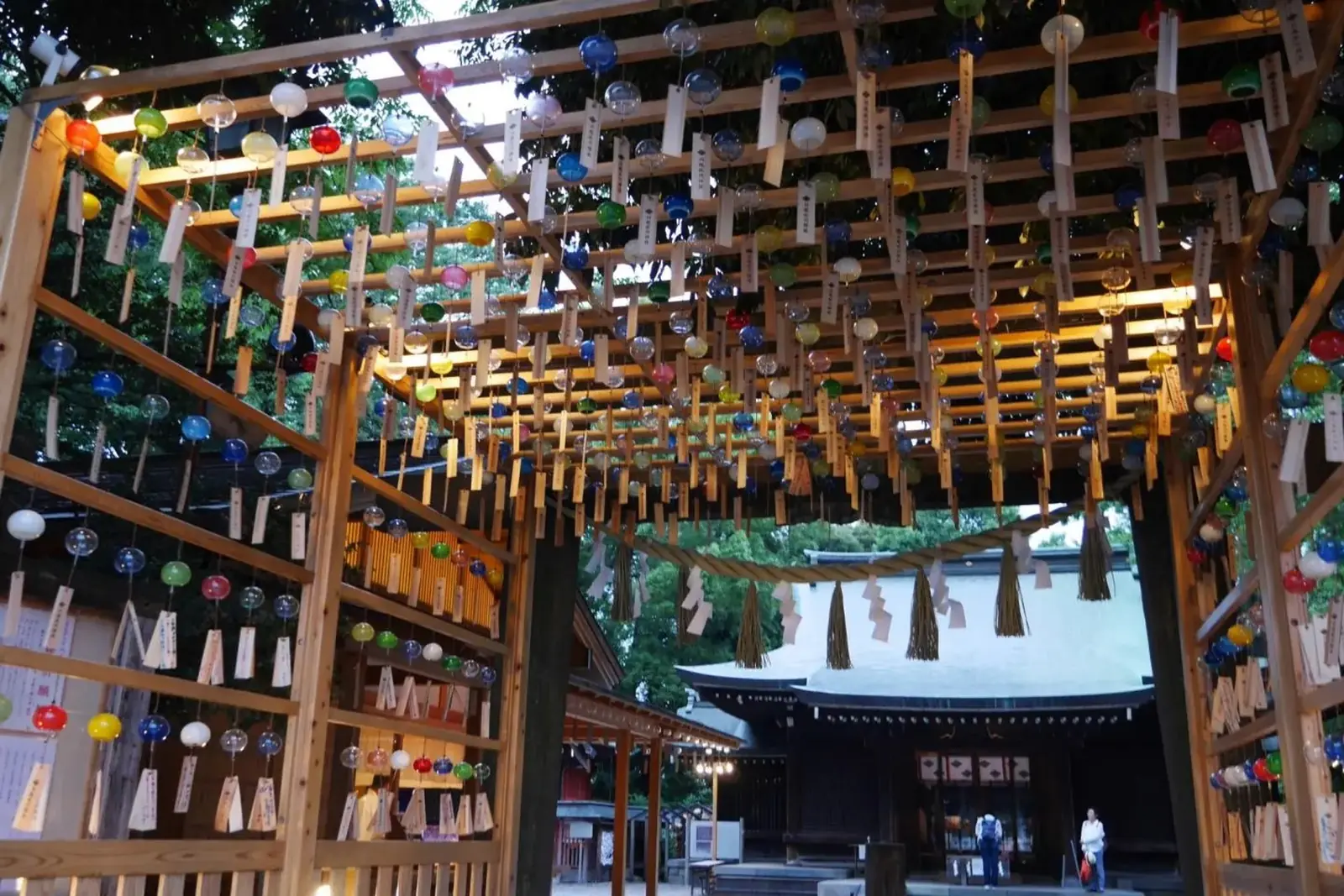
Shrines keep the wish side of the tradition alive. According to the Japan National Tourism Organization, Kawagoe Hikawa Shrine in Saitama Prefecture displays about 1,500 handmade wind chimes, each different in color, shape, and sound, for its Enmusubi Wind Chime Festival from early July to early September, drawing on an old belief that the wind carries people’s wishes.
Keeping the Tanzaku Poem Tradition Alive Outdoors, Plus 5 Short Haiku for Wind Sails
Paper tanzaku strips catch faint summer drafts and carry short seasonal verses, but dew and storm gusts wear thin paper out quickly on an open porch, so an outdoor verse lasts longer engraved on a sail.
Tying a handwritten verse beneath a bell is one of Japan’s loveliest summer customs. On an open American porch, though, paper meets tough weather fast: evening damp curls the edges, ink feathers in the rain, and one sharp gust tears the hole loose.
For a sunny window indoors, a crystal suncatcher chime ($52.95 to $59.95) keeps the glass-and-light feeling of a furin. For the porch, the verse can be laser-engraved on a two-sided metal or solid redwood sail. Read from a porch chair 3 to 5 feet away, two or three short lines per side stay crisp, and every haiku below fits well under the roughly 120 characters one side holds comfortably.
In my verse curation work, the lines families keep loving years later are the gentle ones about light, wind, and home. Verses that dwell on the final goodbye tend to sting a little every morning someone walks past with a cup of coffee. If the poem you love runs longer than three lines, engrave its strongest two or three lines and send the full text in the digital eCard.
“Soft afternoon breeze
Carrying your gentle voice
Across the still porch”
3 LINES · PORCH-CHAIR LEGIBLE AT 3–5 FT
- For a Peaceful Porch: Soft afternoon breeze / Carrying your gentle voice / Across the still porch
- For a Garden Gift: Sunlight on green leaves / One clear note in summer air / Peace within this home
- For Loving Remembrance: Morning garden mist / Each soft wind that passes by / Whispers you are near
- For a Shaded Veranda: Underneath the eaves / Bamboo shadows softly sway / Stillness finds the heart
- For a Family Milestone: Evening lanterns glow / Grateful for the years we shared / Carried on the wind
Hang a glass furin or a crystal suncatcher inside a sunny window from a small metal screw hook set into the wooden window frame, never from a rubber suction cup pressed onto the glass. Shifts in heat and humidity loosen suction cups without warning, and a frame hook keeps delicate glass where you put it.
How to Hang and Care for Glass and Iron Furin Through North American Seasons
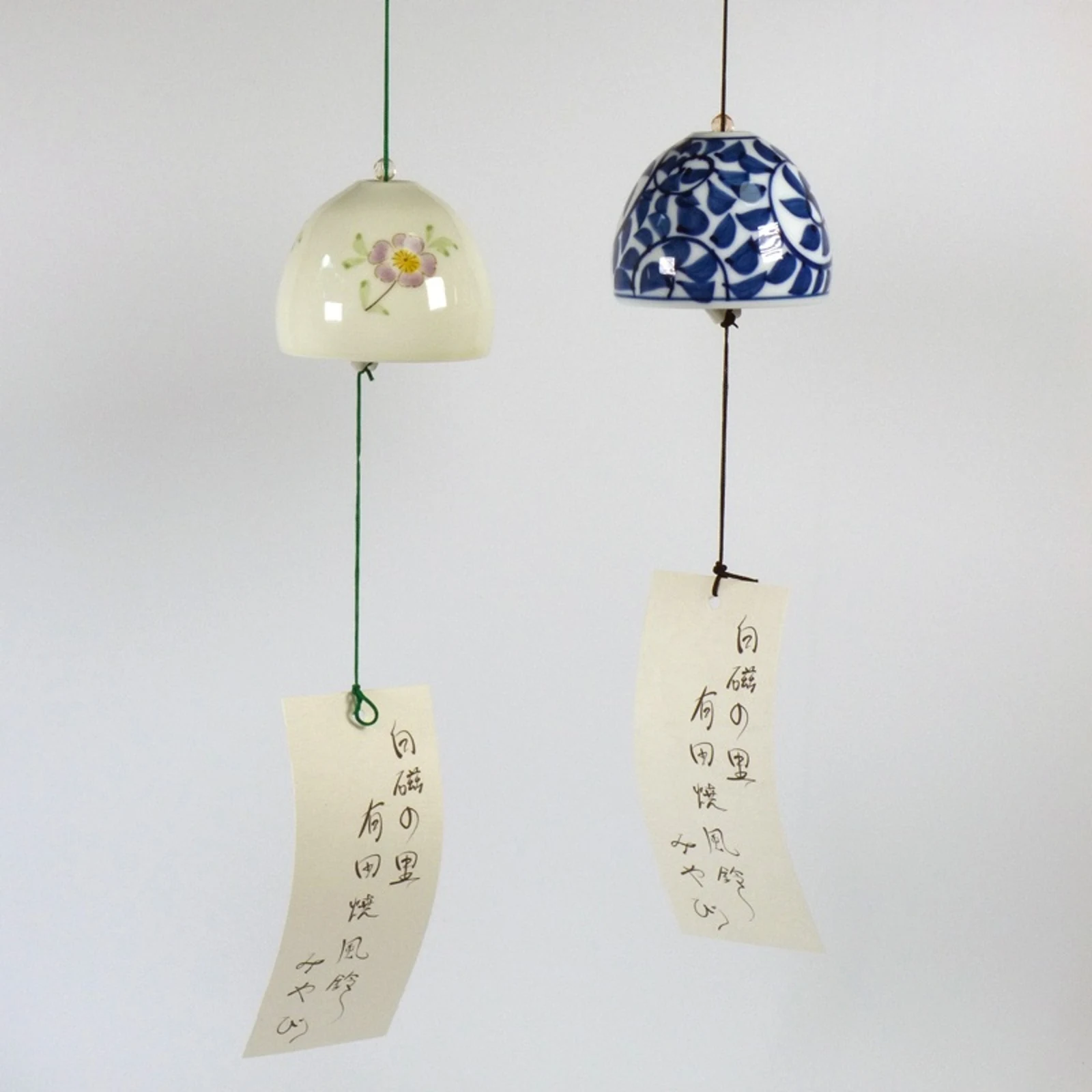
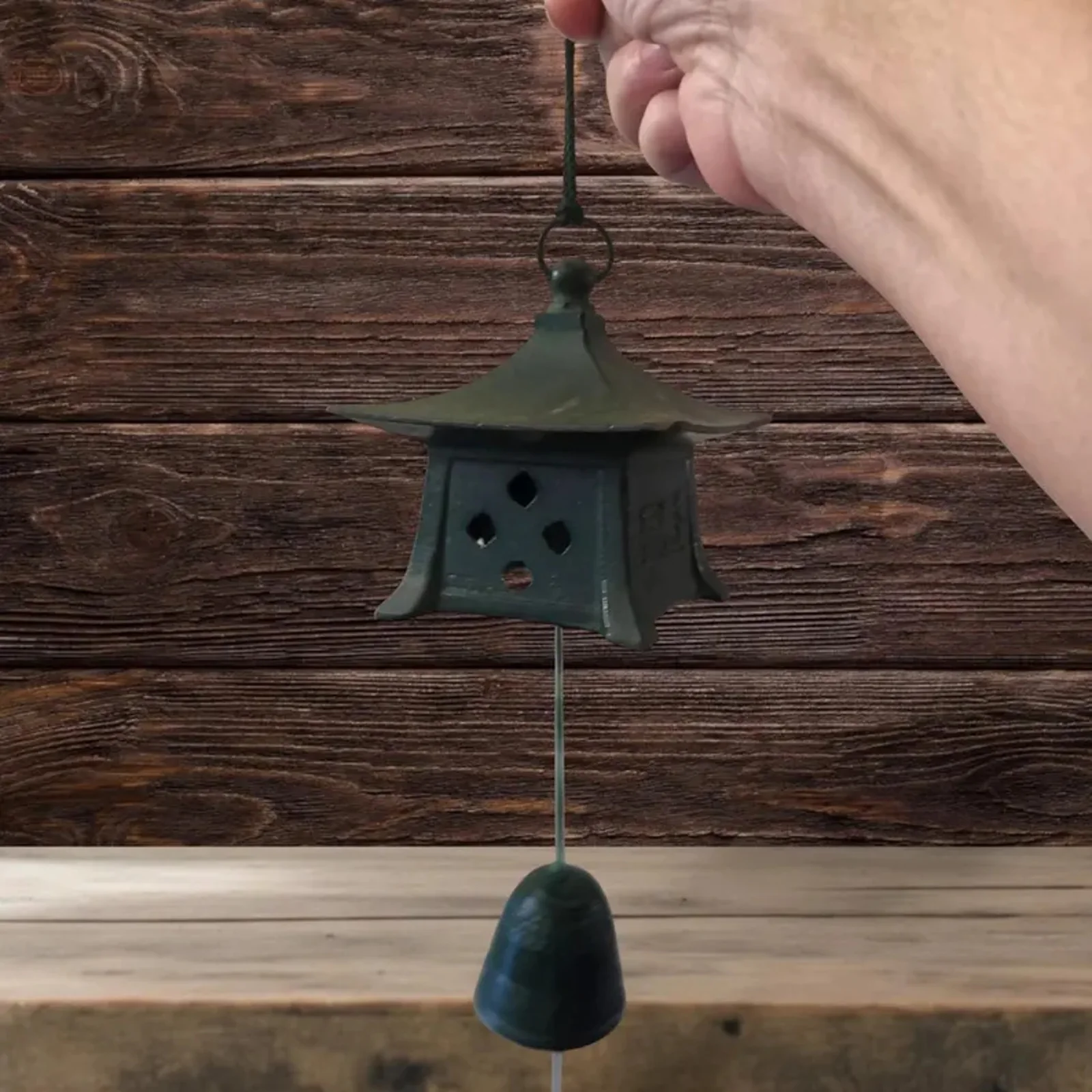
Glass and ceramic furin crack when gusts swing them into hard surfaces or when freezing nights arrive, and cast-iron bells spot with rust at the hook unless they hang under a deep roof overhang.
Authentic furin are made as seasonal veranda companions for calm summer air. In one r/HelpMeFind thread, an owner who dropped a souvenir furin and broke its glass bowl asked strangers to help track down a match, a reminder that a hand-blown bell is hard to replace once it breaks.
Five simple habits protect glass, porcelain, and iron bells:
- Tuck it deep under the eave: Hang glass or ceramic furin well back from the drip line and far enough from posts, brick, and window trim that a gust cannot swing the bowl into them.
- Keep water off the painted glass: Dust the outside with a soft, dry cloth instead of rinsing it, so water never sits on the hand-painted interior, and never file down the rough rim, since it is part of the voice.
- Wipe cast iron dry: After humid days, wipe moisture off a Nambu bell and its hook so rust cannot bloom around the hanging point.
- Quiet it for the night: If a neighbor’s bedroom window sits close, unclip the paper strip or bring the bell inside at bedtime. Without the strip catching air, the clapper barely moves.
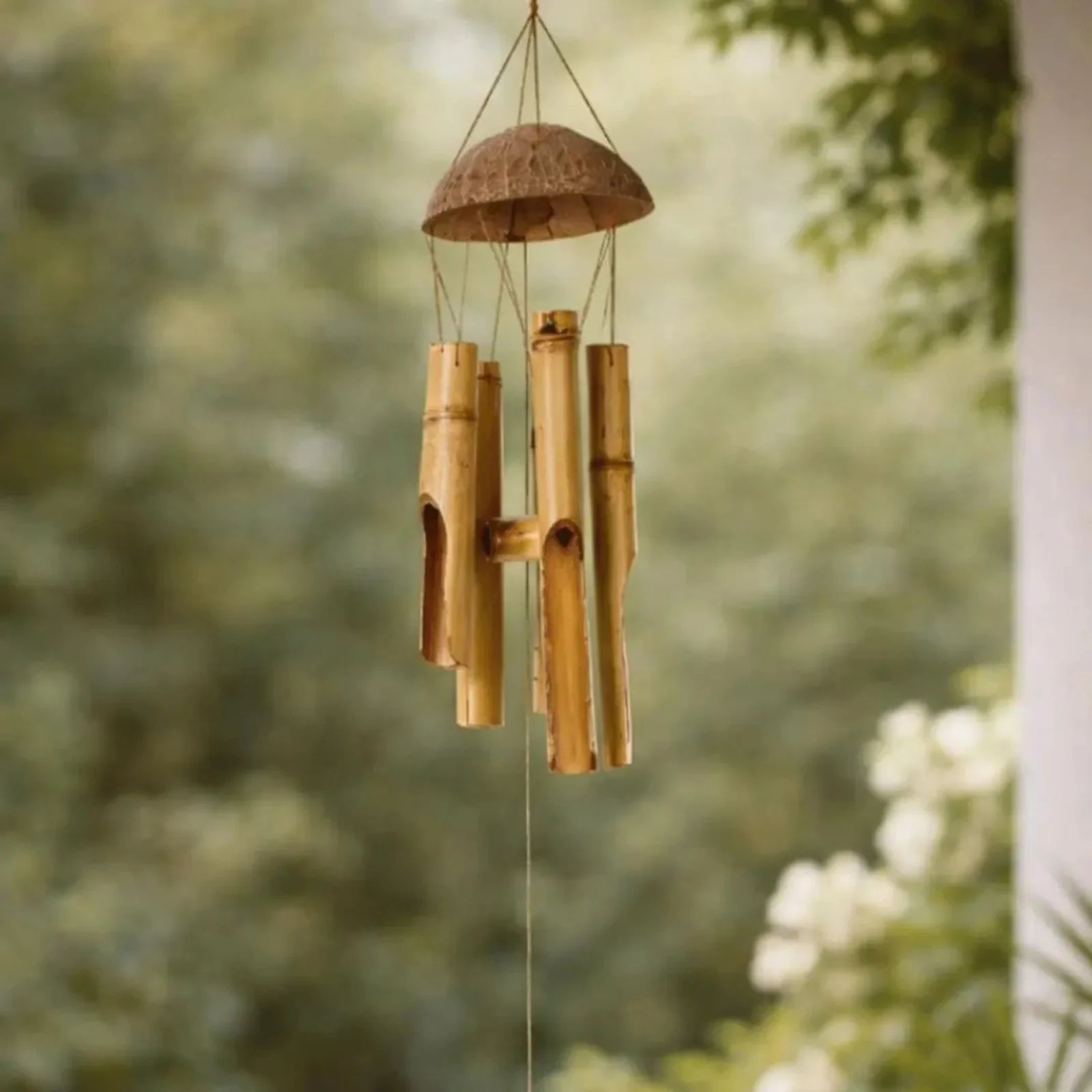
- Switch to hardy tubes before frost: For music outdoors all year, hang chimes built to live outdoors year-round or a deeper-toned aluminum set. A 30-inch bamboo chime ($55.95 to $57.95) gives a soft woody tap that close neighbors rarely mind, as long as it hangs under a covered porch and comes inside before a big snowstorm.
Bring glass and glazed ceramic furin indoors before autumn nights drop below 32 degrees Fahrenheit (0 degrees Celsius). As northern gardeners share in Houzz GardenWeb discussions, freezing moisture and winter gusts crack thin glass and ceramic bells quickly, so store them wrapped in tissue until late spring.
If you want the spirit of a tanzaku verse to stay outside all year, our Listen to the Wind chime comes in 28, 32, or 36 inches ($52.95 to $84.95) with six anodized aluminum tubes and a sail laser-engraved on both sides. It arrives in a die-cut molded-foam gift box with no price inside, by tracked US delivery in 11 to 17 business days (3 to 5 days of engraving plus 8 to 12 in transit). You get a 4-hour window to fix any typo, plus a free ($0) Instant Digital Sympathy & Audio Preview eCard you can send the same day. Orders under $85 ship for $6.95, and orders of $85+ ship free in the US.
Frequently Asked Questions
What are the three parts of a Japanese furin wind chime?
A traditional furin has three working parts: the outer bell (sotomi) of glass, cast iron, brass, or porcelain; the clapper (zetsu) hanging inside on a cord; and the paper strip (tanzaku) below that catches the breeze and swings the clapper.
Why is the rim of an Edo glass wind chime left rough and jagged?
Edo glassmakers leave the mouth of each bell uneven on purpose instead of polishing it smooth. The slim glass clapper taps that rough edge, and the irregular rim gives every bell its own slightly different voice, so no two Edo furin sound exactly alike.
What do people write on the paper strip hanging from a Japanese wind chime?
Families and festival visitors write short summer haiku, seasonal greetings, or quiet wishes for health and household peace on the tanzaku, trusting each passing breeze to carry the words across the garden. For an outdoor keepsake, two or three short lines engraved on a sail stay readable for years.
Is a Japanese furin too loud for close neighbors?
A furin is small, but its high, bright note carries and repeats with every puff of wind, which can keep a light sleeper next door awake. Hang it inside an open window by day, unclip the paper strip at night, or choose a 30-inch bamboo chime, whose woody tap fades in under a second.
Can you leave a glass or cast-iron furin outside all year?
Glass and ceramic furin belong indoors before autumn storms and nights below 32°F, and cast-iron Nambu bells also last longer stored dry over winter. For a porch that needs music year-round, anodized aluminum chimes with laser-engraved sails can stay outside through every season; after an ice storm, just check that the extra weight of ice has not strained the hook.
Conclusion
A tiny hand-blown furin catching a shaded veranda breeze is one of summer’s gentlest sounds, and a set of aluminum tubes carrying a loved name or a three-line poem can keep that feeling going through winter. Give glass and iron the calm, sheltered eaves of June through September, bring them in before frost or whenever a neighbor’s window is close, and turn to anodized aluminum or covered-porch bamboo when your porch faces open sky.
Whether you hang a delicate glass furin inside an open July window or etch a three-line haiku onto a weather-hardy porch sail, let those few quiet words welcome every passing breeze. – Hannah Mercer, Bereavement Etiquette & Verse Curator
Verified Cultural, Craft & Care References (3 Sources)
- Japan National Tourism Organization (JNTO): Kawagoe Hikawa Shrine Wind Chimes (Enmusubi Wind Chime Festival) — https://www.japan.travel/en/japans-local-treasures/kawagoe-hikawa-shrine-wind-chimes-2022/
- Wikipedia Cultural Reference: Fūrin (History, Edo Fūrin Craft & Mizusawa Station Soundscape) — https://en.wikipedia.org/wiki/F%C5%ABrin
- Houzz GardenWeb Overwintering Discussion: Winter Care for Glass and Ceramic Bell Wind Chimes — https://www.houzz.com/discussions/1480703/bell-wind-chimes-finished