

Weather-Hardy Multi-Tube Chimes vs. Sheltered Window Keepsakes
For an open porch, choose a six-tube anodized aluminum chime (28 to 36 inches, $52.95 to $89.95) for a warm, rounded voice and a two-sided engraved sail. Under a covered eave, a 30-inch bamboo chime ($55.95 to $57.95) gives a soft woody tap. Concert makers like Music of the Spheres suit large courtyards, often at $110 to $300 and up, and brass coin bells or vintage glass belong in sheltered windows. PersonalizedChimes.com makes engraved aluminum, bamboo, and crystal suncatcher chimes rather than brass coin charms or vintage glass, so our store links point to our own collections.
Skip an unmuted metal chime outdoors if a neighbor’s bedroom window sits within about 15 to 25 feet and you will not mute the chime on windy nights (bamboo or an indoor suncatcher is kinder there), or if you plan to hang thin glass strips in a gusty breezeway.
Comparing the 3 Styles Known as Chinese Wind Chimes Today
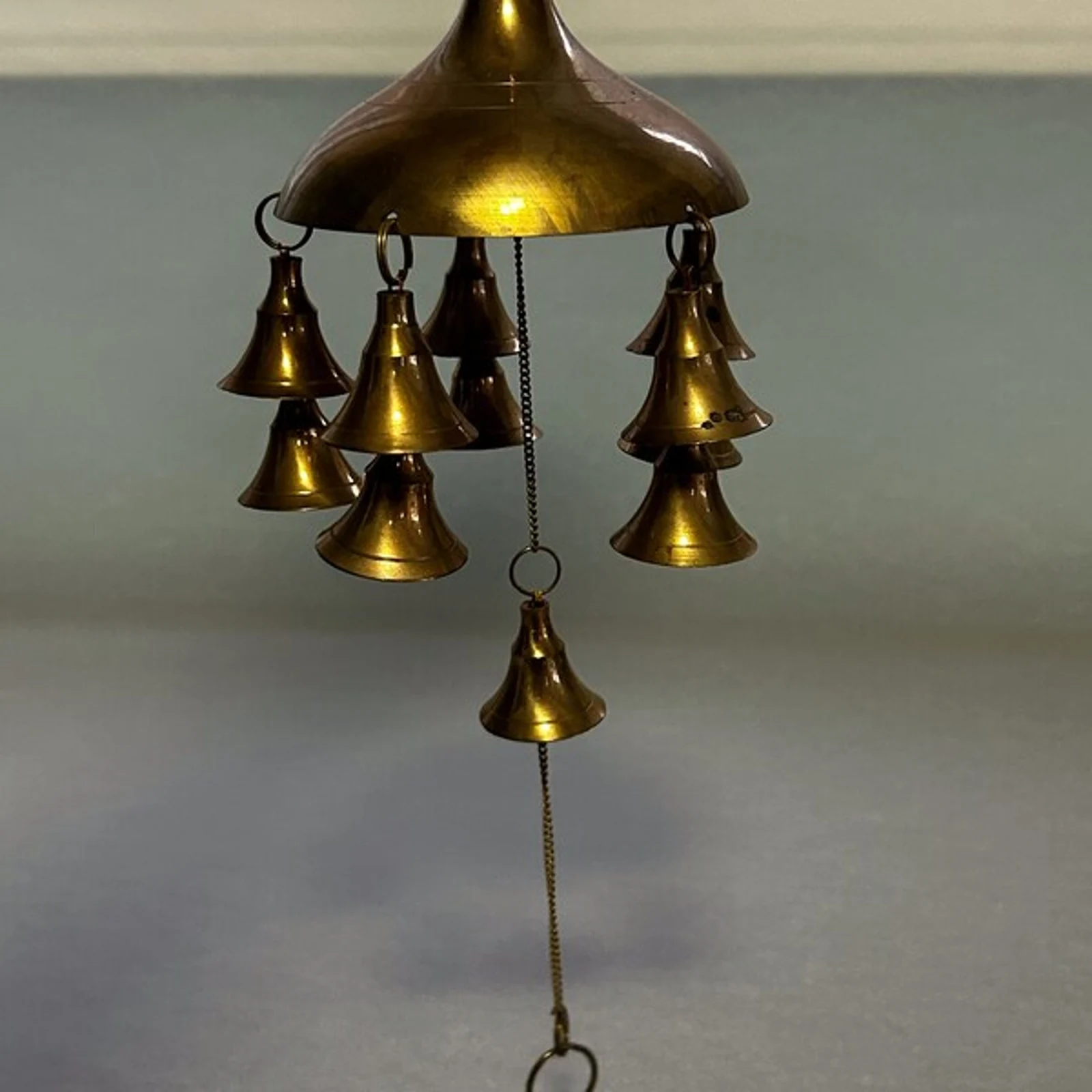
Three distinct designs share the name Chinese wind chimes today: cast-brass temple and coin charms, mid-century painted glass strips, and multi-tube metal or bamboo chimes, some of them tuned to the five-note Chinese scale.
Search for Chinese wind chimes online and the results jump across centuries and price brackets in a single scroll. One listing shows palm-sized brass bells strung with red knots and square-hole coins, while the next shows six thick metal tubes costing several hundred dollars.
The three styles grew out of different chapters in the broader history of wind chimes around the world. Hold them in your hands and listen in a real yard breeze, and the differences show up right away. Small brass coin bells weigh only a few ounces and answer every puff of air with a brisk, high jingle. Six-tube anodized aluminum chimes in the 28- to 36-inch range weigh roughly 1.3 to 2.4 pounds, enough heft to swing slowly around a hardwood striker and fade like a distant temple bell.
| Chime Style | Materials & Build | Real-Ear Sound | Outdoor Weather Care | Typical US Price |
|---|---|---|---|---|
| Brass Coin & Pagoda Bells | Small cast-brass domes, red cord, coin charms | Bright, rapid, high metallic ring | Covered doorway; red cord fades in strong sun | Budget gift-shop pricing |
| Vintage Painted Glass Chimes | Thin glass rectangles hung on light red string | Delicate glass-on-glass tinkle | Indoor window or enclosed sunroom only | Thrift and resale finds; prices vary widely |
| Concert Chinese-Scale Chimes | Long, heavy-walled tubes tuned to a named scale | Rich, resonant courtyard sustain | Year-round outdoors on heavy structural mounts | Often $110 to $300 and up |
| 30″ Natural Bamboo Chimes | Kiln-dried bamboo tubes with an engraved solid redwood sail | Soft, hollow woody clack under 1 second | Covered porch eave; bring inside before snowstorms | $55.95 to $57.95 |
| 28″ to 36″ Engraved 6-Tube Aluminum | Six anodized aluminum tubes, hardwood striker, two-sided laser sail | Warm, rounded tone that fades slowly | Year-round outdoors on a standard porch hook | $52.95 to $89.95 (free US shipping $85+) |
Matching the right build to your space comes down to balancing nostalgia, weather exposure, and how close your neighbors live:
- Courtyard heritage: Cast-brass pagoda bells carry centuries of traditional threshold symbolism in a compact footprint.
- Sunlit nostalgia: Painted glass chimes catch morning window light and bring back memories of a mother’s or grandmother’s front porch in the 1960s.
- Gentle breeze pickup: Lightweight brass vanes and glass rectangles respond to faint indoor drafts beside an open window.
- Fragile in open wind: Thin string and glass rectangles rarely survive a strong gust or curious young hands.
- Nighttime jingle: Lightweight brass coin clusters can clatter nonstop at 2 a.m. during breezy weather.
- Calmer porch alternative: Thick-walled aluminum and bamboo chimes keep a steadier, gentler rhythm for close neighbors.
3,500 Years of Chinese Bell Craft: From Court Bianzhong to Pagoda Fengling
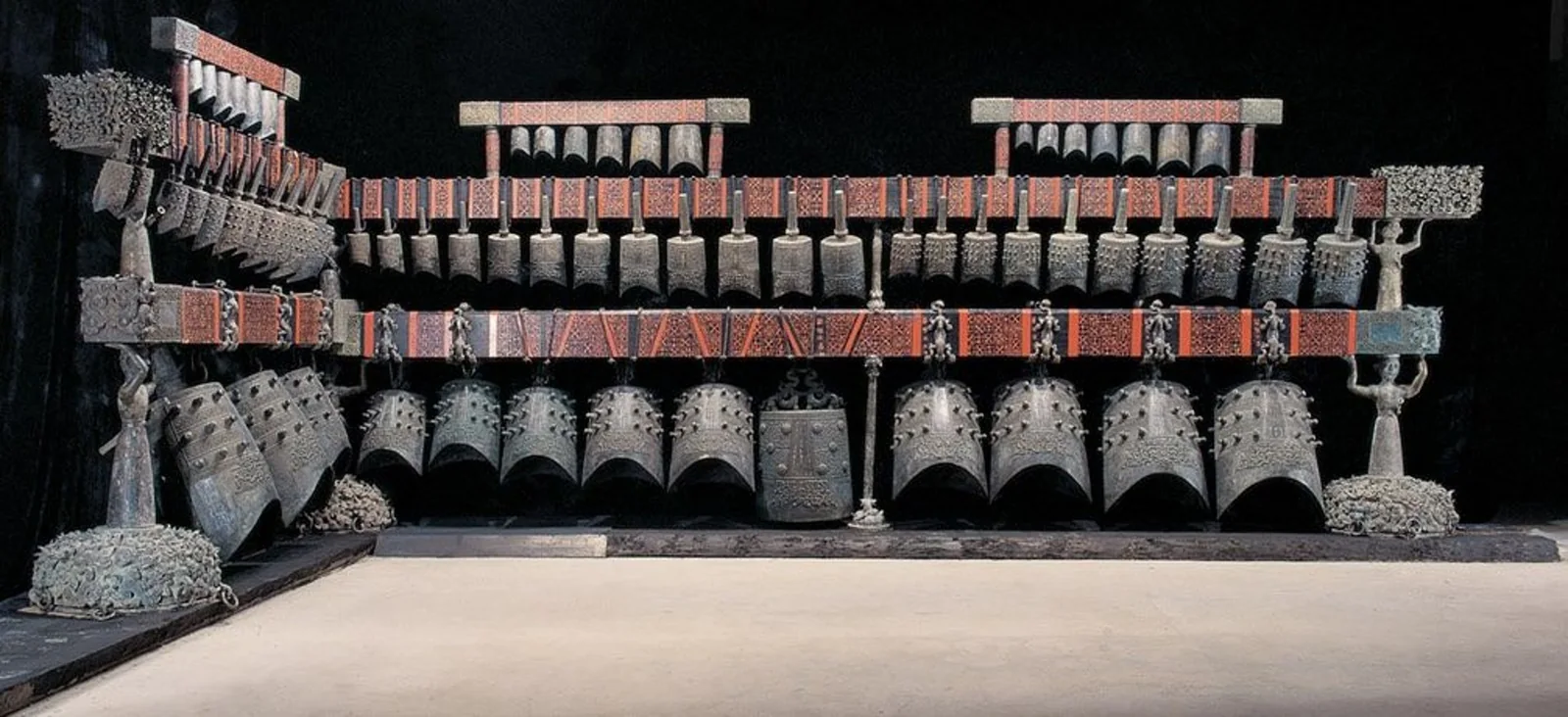
Chinese bell casting began more than 3,500 years ago with small bronze noisemakers that grew into tuned court bianzhong sets, centuries before Tang and Song dynasty builders hung wind-rung fengling bells beneath curved pagoda eaves.
Quick online summaries often squeeze this story into a single date, which skips most of the bronze record. Archaeological finds show that ancient China mastered tuned metal sound long before bells ever hung from garden hooks.
Bronze Yongzhong and Two-Tone Bianzhong Court Bells
According to the Smithsonian National Museum of Asian Art, bells were among the first metal objects made in China, beginning more than 3,500 years ago as small noisemakers that grew into gongs and then sets of hand bells. By the Zhou dynasty, foundries were casting graduated sets of clapperless bells called bianzhong. Notable survivors include a set of six yong bells with dragons from the late Eastern Zhou (ca. 525 to 475 BCE) at the Smithsonian and the 65-bell Marquis Yi of Zeng set from 433 BCE, described in Wikipedia’s history of bianzhong.
Unlike round Western church bells, many of these ancient bells had an almond-shaped cross-section. Musicians struck the outside wall with wooden mallets, and one bell could ring two distinct pitches depending on whether the mallet hit the center or the side. Tapping metal from the outside with wood kept the voice warm and clear, much like the rounded hardwood striker inside a good porch chime today.
Tang and Song Dynasty Pagoda Eave Bells (Fengling)
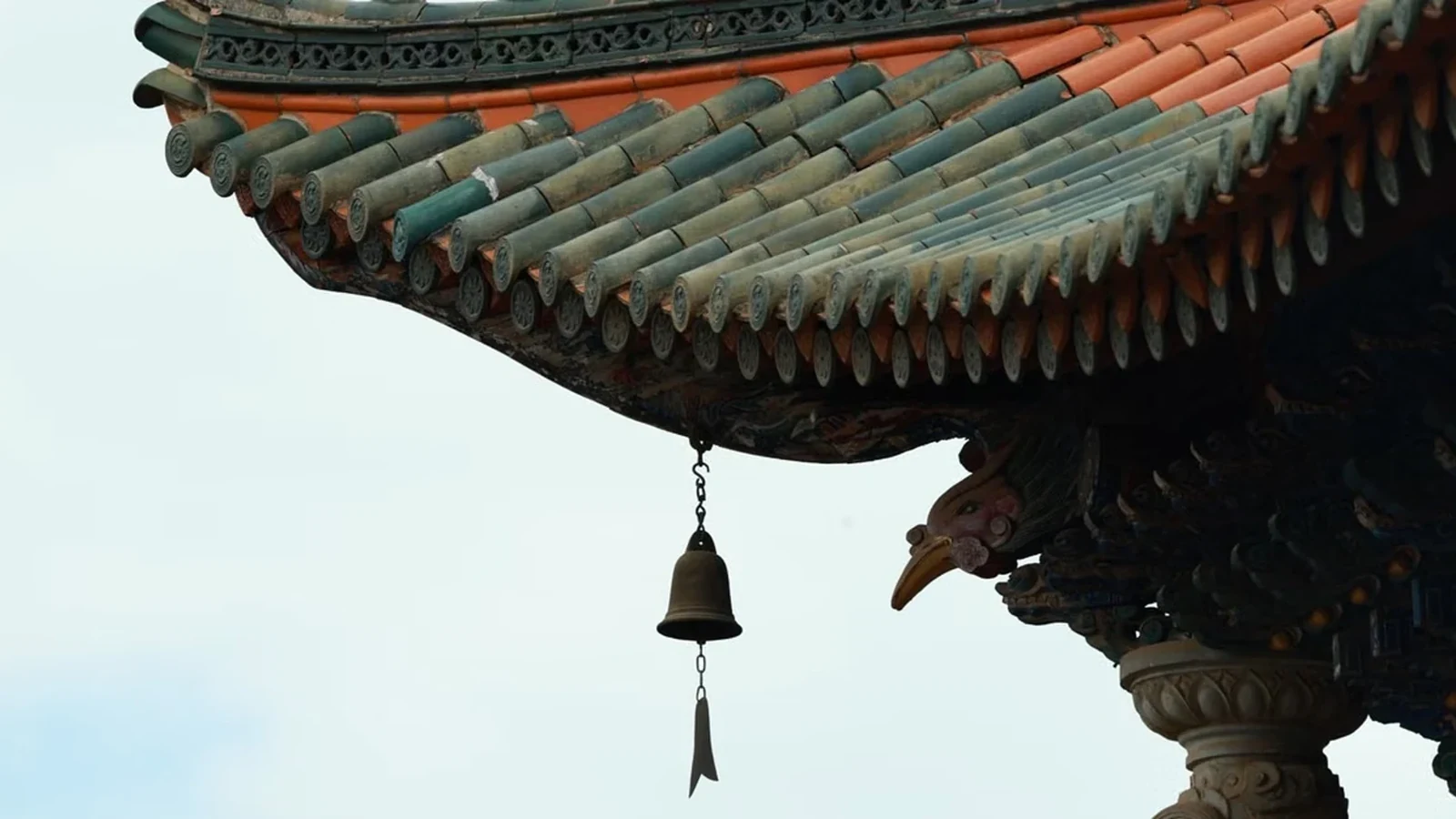
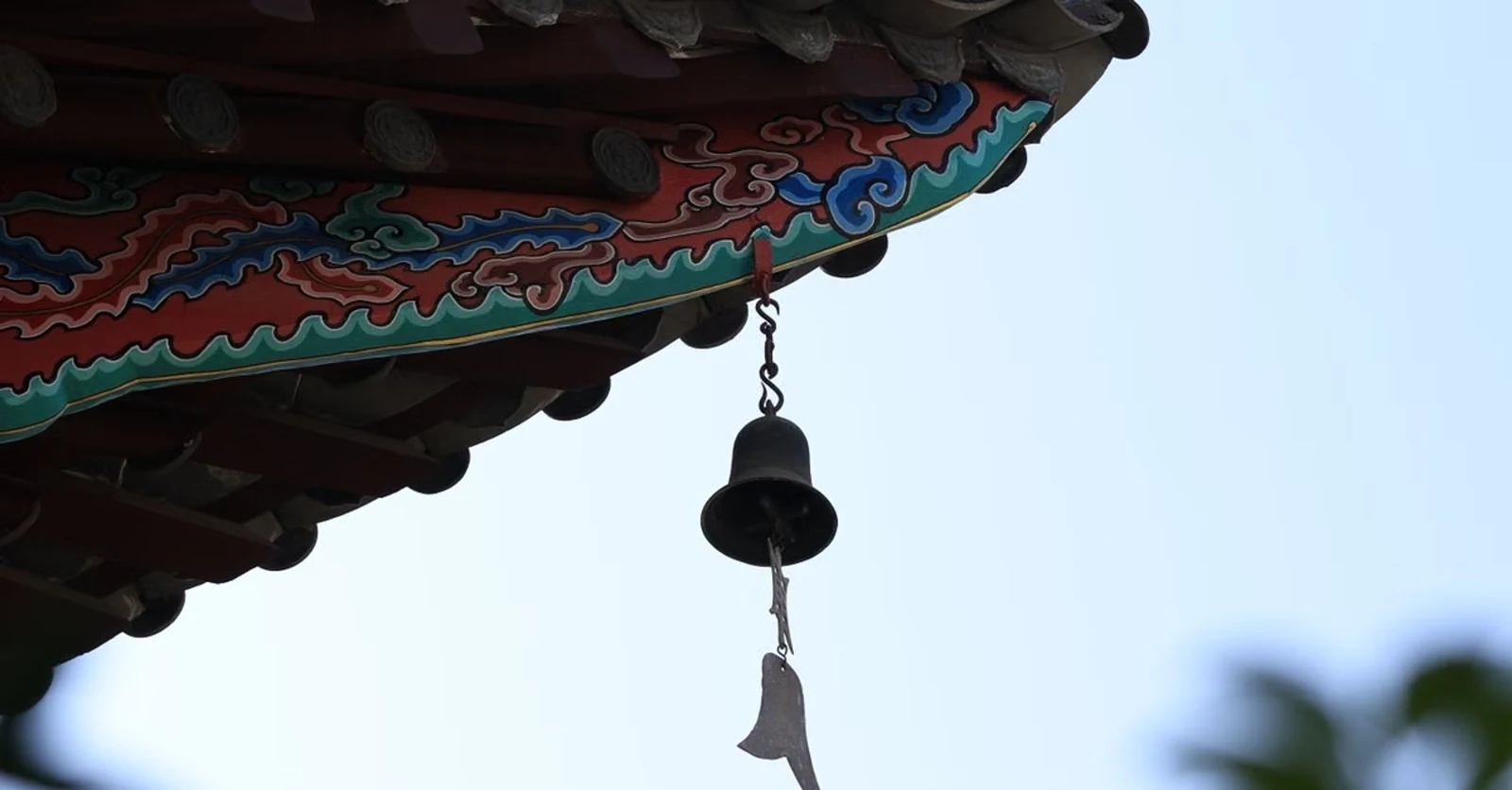
Wind-driven bells spread across China as Buddhist temples and tall pagodas rose, thriving during the Tang dynasty (618 to 907 CE) and the Song dynasty. Builders hung small bronze bells called fengling (“wind bells”) or baoduo beneath the upturned corners of timber roofs.
Those corner bells are often said to have done practical work first: their swinging clappers discouraged birds from nesting in carved roof brackets and let monks hear storm winds shifting across the courtyard. In time, the eave-bell custom moved into family courtyards, and Buddhist travelers carried it across the sea, inspiring traditional Japanese temple futaku and summer glass furin.
Why 1960s Chinese Glass Chimes Sounded So Sweet (and Broke So Easily)
Imported 1960s Chinese glass wind chimes charmed American families with painted glass rectangles and a soft glass-on-glass tinkle, though the thin glass and light string rarely survived outdoor gusts or curious young hands.
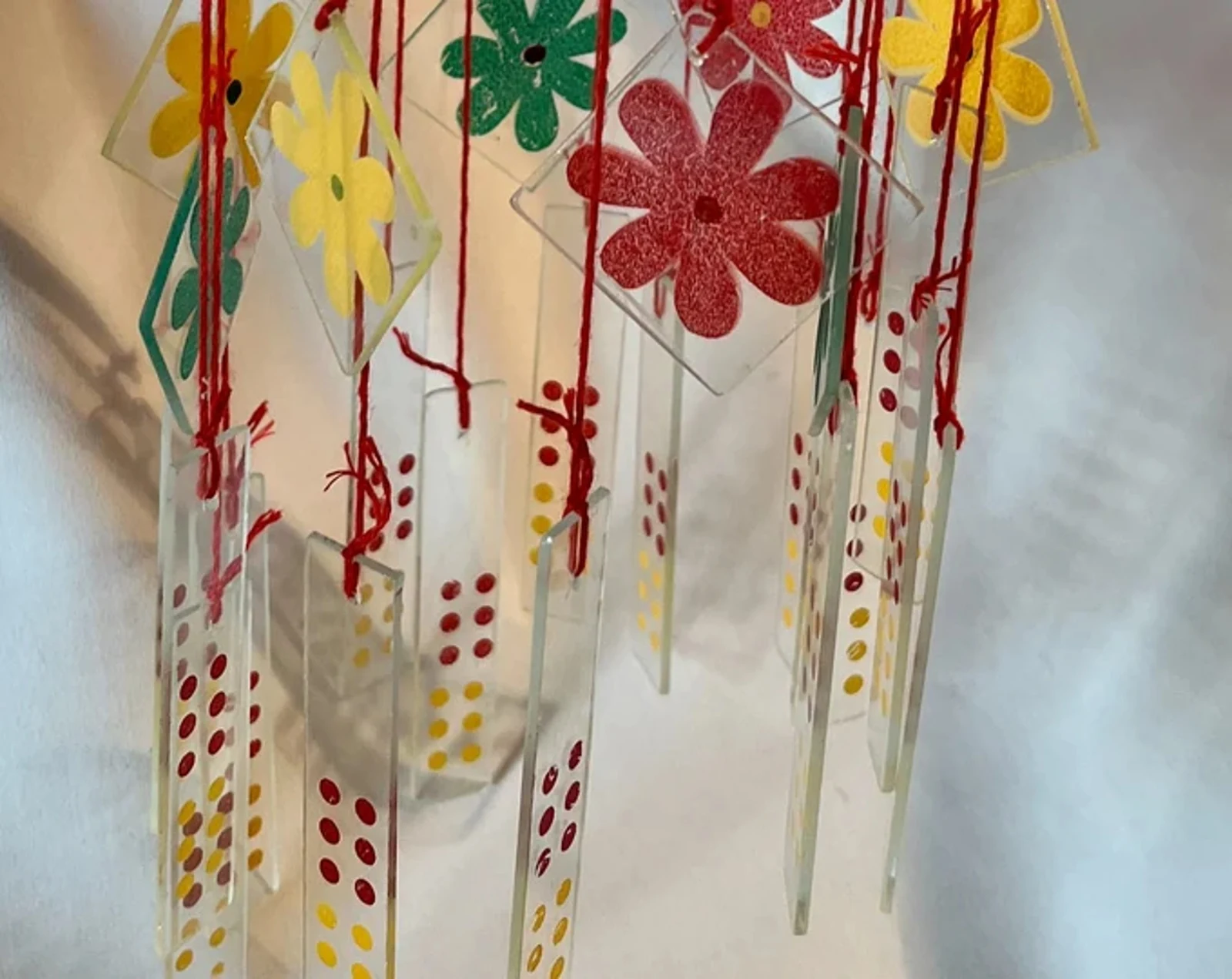
Mention Chinese wind chimes to anyone who grew up in the 1960s or 1970s, and a specific childhood memory often comes right back: square and rectangular glass pieces, some of them painted, hanging from thin red strings and bought for pocket change at the five-and-dime or a Chinatown gift shop.
In a long-running Houzz Home Decorating discussion, readers remember a mother or grandmother hanging those chimes on the front porch, and the sweet tinkle every time a summer breeze passed. Many also remember how quickly the pieces broke, and one glass-chime maker in the thread warns that hanging them outside means they will shatter. For a lot of readers, the search for those chimes is really a search for that porch and the person standing on it.
If you miss the way sunlit glass danced in a quiet window, a crystal prism suncatcher wind chime ($52.95 to $59.95, or $88.95 in a 36-inch deluxe build) keeps that light play alive with an optical K9 crystal that scatters small rainbows across the room. Hang glass or crystal chimes from a small metal screw hook set into solid wooden window trim, never from a rubber suction cup that can dry out and drop onto the sill, and bring them inside before temperatures fall below 32°F.
Wu Sheng: How the Five-Note Chinese Scale Keeps Wind-Struck Notes from Clashing
Traditional Chinese Wu Sheng tuning uses five notes (Gong, Shang, Jue, Zhi, Yu) with no half-step intervals between them, so two or three tubes tuned this way can strike together without a sour clash.
Why do some metal chimes make your shoulders drop on a warm evening while cheap bargain-bin tubes set your teeth on edge? Your ears are reacting to intervals and rhythm, not just volume.
Cheap thin-walled chimes are often cut to random decorative lengths. When a midnight gust knocks three of them together, clashing notes ring out in an erratic, stop-start rhythm that can wake light sleepers right through a closed window. Classical Chinese music offers a different model in Wu Sheng, the five-tone scale built on Gong, Shang, Jue, Zhi, and Yu (roughly C, D, E, G, and A on a piano).
Because those five notes skip the tense half-steps of a seven-note Western scale, a chime tuned to them has no sour pairing waiting in the wind. Austin workshop Music of the Spheres describes its Chinese scale as an inversion of the pentatonic and the lightest, sweetest of its tunings, and concert makers in that tier often price chimes at $110 to $300 and up. Our engraved 28- to 36-inch aluminum chimes are not sold as Wu Sheng instruments. What they share with the tradition is thick walls and a hardwood striker that keep the voice round and unhurried, so listen to the studio audio preview before you choose a size.
Practical Feng Shui Placement: Matching Six Metal Tubes or Bamboo to Your Porch
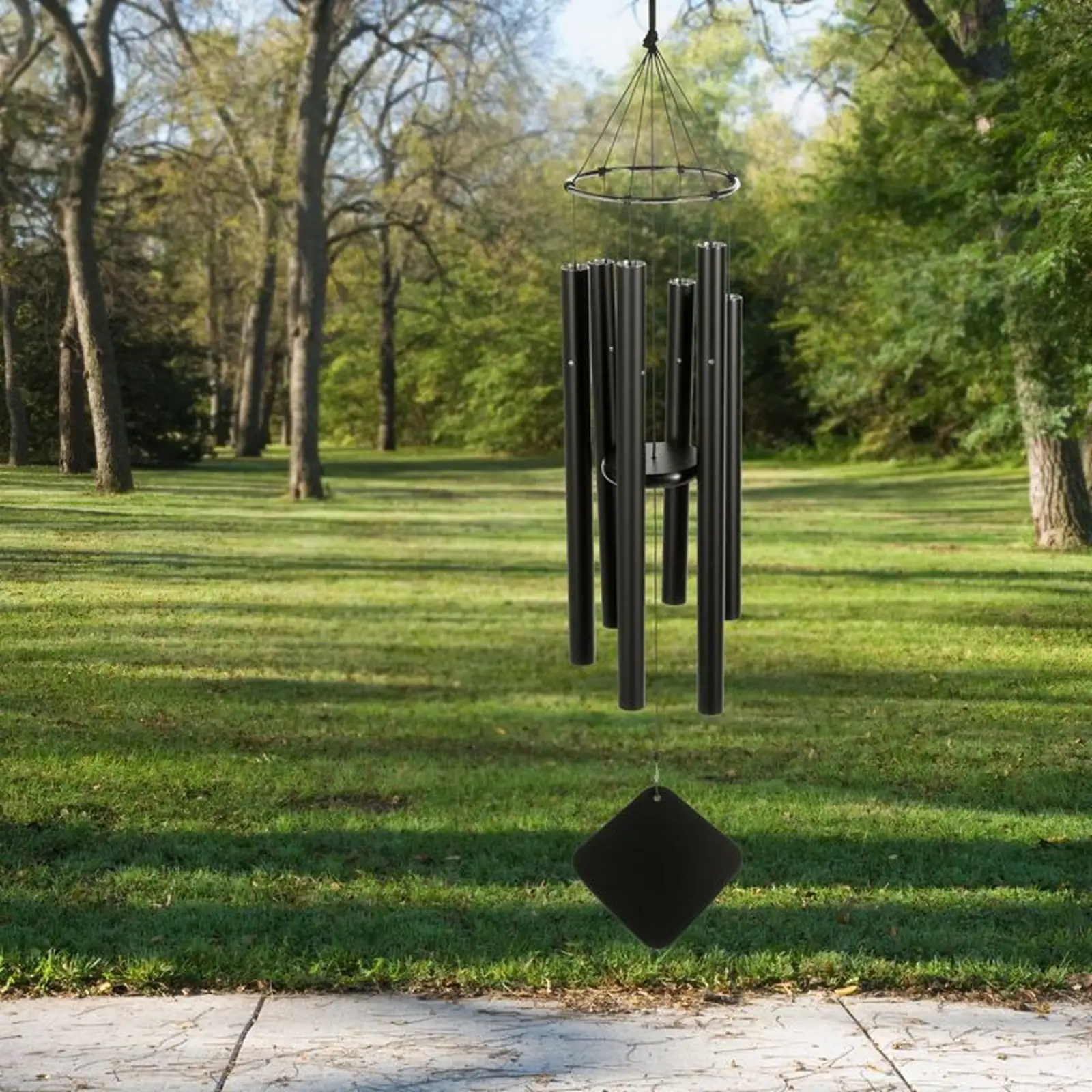
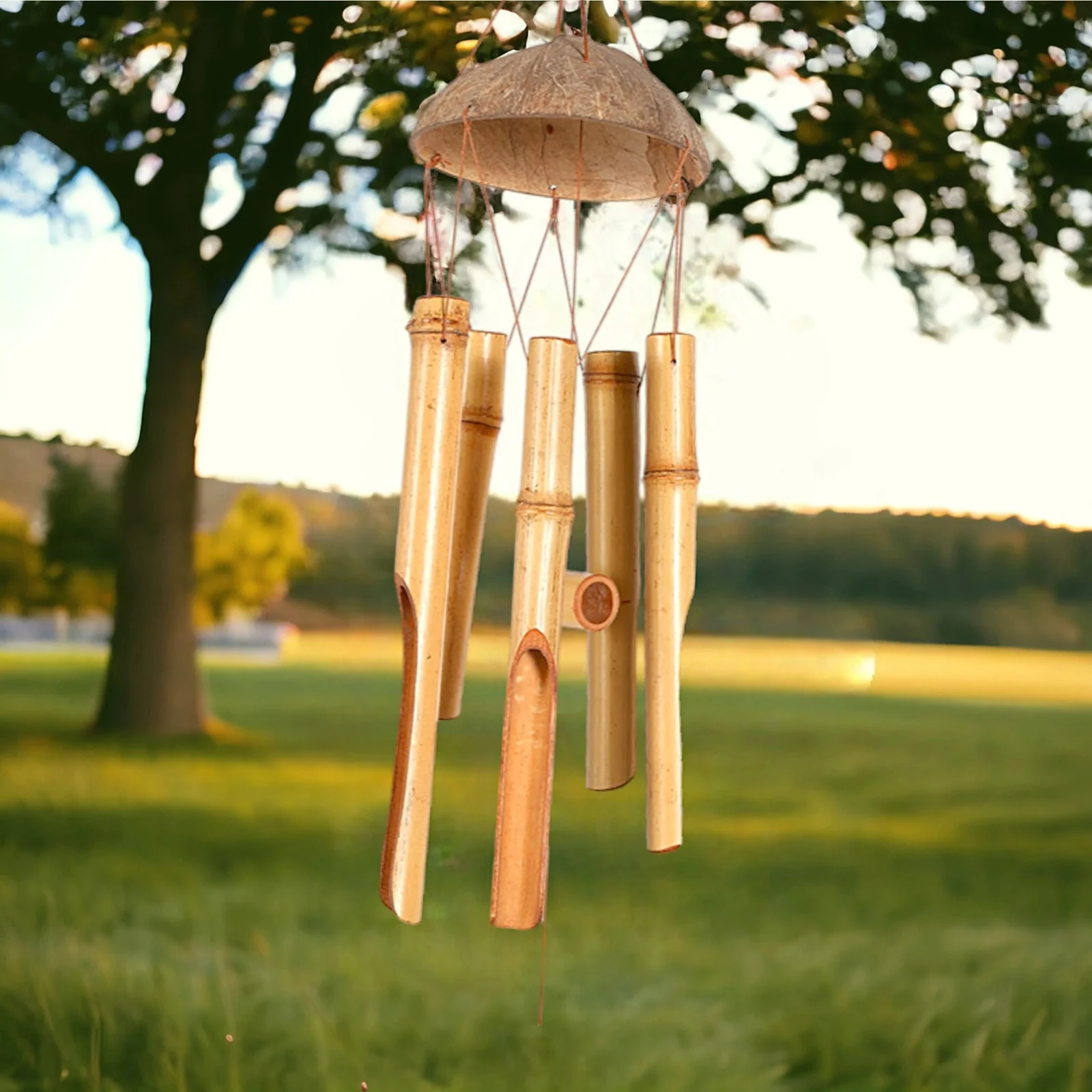
Everyday Feng Shui practice pairs hollow six-rod metal chimes with West, Northwest, and North porches, and 30-inch natural bamboo chimes with East and Southeast spaces sheltered under a roof overhang.
Browse Feng Shui websites for ten minutes and it is easy to walk away anxious about “bad stars” and conflicting compass rules. Traditional placement was never meant to make you fearful of your own front porch; at heart, it is a thoughtful way to match natural materials, gentle sound, and fresh air around your home.
If you remember only one thing, choose a chime whose voice you genuinely enjoy and hang it where it can move freely. The compass guidelines simply help you pick a material, and four of them cover almost any American porch or patio:
- West, Northwest, and North (Metal & Water): Hang a hollow six-tube anodized aluminum chime (28, 32, or 36 inches). In five-element practice, the number six is linked to the Qian trigram of heaven, traditionally associated with helpful people and steady support at home.
- East and Southeast (Wood): Choose a 30-inch kiln-dried natural bamboo chime ($55.95 to $57.95). Hollow bamboo tubes tap together with a quiet, dry woody clack that fades in under a second, blending into rustling garden leaves.
- Southwest and Northeast (Earth): Brighten a sunny sunroom or sheltered corner with an optical K9 crystal suncatcher chime (23 to 26 inches, $52.95 to $59.95) that scatters quiet rainbow light across the wall.
- Three Spots to Skip: Avoid hanging any chime directly overhead above a bed or fixed desk chair, keep it clear of swinging entry doors that slam into the tubes, and hang natural bamboo well back under a covered roof so driving rain does not split the wood over time.
Good Feng Shui starts with peaceful neighbors. If a neighbor’s bedroom window sits within about 15 to 25 feet, tuck metal chimes behind a porch post to soften gusty crosswinds, and on stormy nights loop the sail up onto the top hook or wrap the center cord once around the tubes, a ten-second fix you undo over morning coffee.
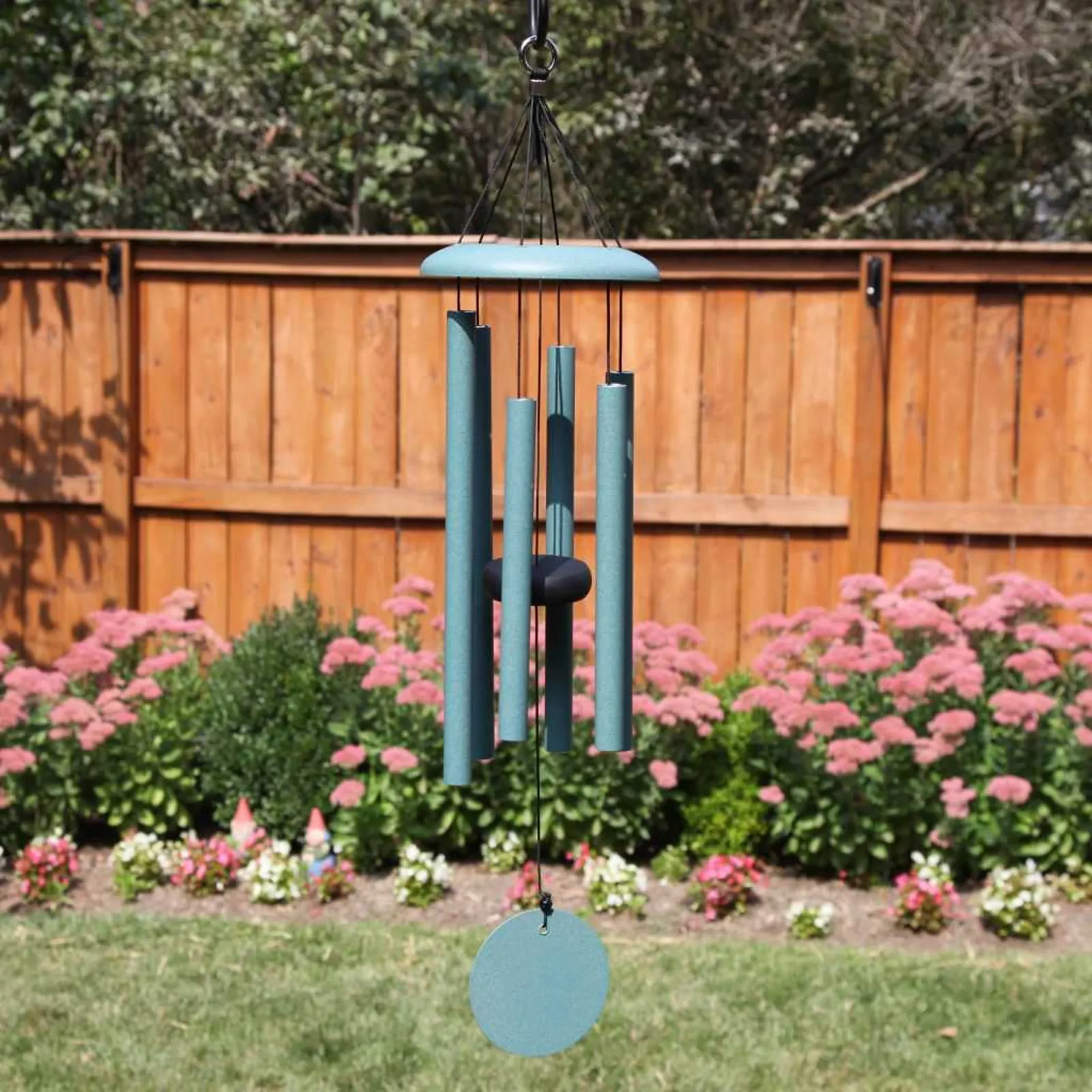
For weather-ready chimes built for an outdoor porch, our six-tube Listen to the Wind chime (28, 32, or 36 inches, $52.95 to $84.95) lets you laser-engrave a family name, a date, or a short blessing on both sides of the wind sail. Kept to two or three short lines per side, the lettering reads cleanly from a porch chair 3 to 5 feet away.
Every chime ships in a protective die-cut molded-foam gift box with no prices inside, and you have a 4-hour window to fix any typo after ordering. Tracked US delivery takes 11 to 17 business days in total (3 to 5 for engraving plus 8 to 12 in transit; $6.95 under $85, or free standard US shipping on $85+). If the chime is a gift, the free ($0) Instant Digital Sympathy & Audio Preview eCard lets you share a preview of the engraved sail and its sound right away.
Frequently Asked Questions
Were wind chimes originally invented in China?
Simple wind-rattled charms of shell, bone, and bamboo appear in many early cultures, so the very first wind chime has no single birthplace. China’s lasting contribution was tuned cast-bronze bells, which began more than 3,500 years ago, and wind-rung fengling temple eave bells that spread during the Tang dynasty (618 to 907 CE).
Why do traditional Chinese Feng Shui wind chimes often use six hollow rods?
Classical compass Feng Shui links the number six to the Qian trigram and the Metal element, symbolizing helpful people, clear movement, and household support. Practitioners also say hollow rods let energy, or chi, rise freely through the tubes, and six rods give a full chord without crowding a residential porch.
What is the 5-note Chinese pentatonic scale used on wind chimes?
The traditional Wu Sheng scale uses five degrees (Gong, Shang, Jue, Zhi, and Yu) and leaves out the tight half-step intervals found in seven-note scales. Chimes tuned this way make a harsh clash much less likely, even when several tubes swing together in a gusty breeze.
Are metal or bamboo Chinese wind chimes better for an uncovered porch?
Thick-walled anodized aluminum tubes on UV-stabilized braided cord handle open four-season sun, rain, and frost far better than natural wood or glass; after a few years, the cord usually wears before the tubes do and can simply be restrung. Natural 30-inch bamboo chimes give a quiet woody tap that close neighbors appreciate, but bamboo lasts far longer beneath a covered porch roof and brought indoors before winter storms.
Conclusion
Chinese wind chime history runs from small bronze noisemakers more than 3,500 years ago, through royal bell frames and Tang pagoda eaves, to childhood glass strips on red string and modern multi-tube porch chimes. Keep fragile painted glass and small brass coin charms in calm, sheltered windows, match six-tube anodized aluminum or sheltered 30-inch bamboo to your porch exposure, and keep a quick mute plan ready if a neighbor’s bedroom sits close by so every breeze feels restful.
Whether you treasure the memory of painted glass on a grandmother’s porch or hang six tubes beneath your own front eave, may every passing breeze bring a quiet moment of peace to your home. – Hannah Mercer, Bereavement Etiquette & Verse Curator
Verified Historical, Acoustic & Cultural References (4 Sources)
- Smithsonian National Museum of Asian Art: Resound: Ancient Bells of China — https://asia.si.edu/whats-on/exhibitions/resound-ancient-bells-of-china/
- Wikipedia Cultural & Archaeological Reference: Bianzhong (Eastern Zhou & Marquis Yi of Zeng Bronze Bell Sets) — https://en.wikipedia.org/wiki/Bianzhong
- Houzz Home Decorating Archive: Remember Those Chinese Glass Windchimes? — https://www.houzz.com/discussions/1371878/remember-those-chinese-glass-windchimes
- Music of the Spheres Workshop Reference: Chinese Pentatonic Tuning Overview — https://www.musicofspheres.com/